They Couldn't Get the Words Out. Then They Changed the World with Them.
They Couldn't Get the Words Out. Then They Changed the World with Them.
There's a particular cruelty in being called to speak when speaking feels impossible. For most people, a stutter or a stammer is a source of private embarrassment — something to manage, minimize, hide. For a handful of extraordinary Americans, it was the central obstacle of lives that would ultimately be defined by the power of their words.
What follows are five of those lives. Not case studies in overcoming adversity — that framing is too clean, too neat. These are stories about what happens when the struggle to be heard forces a person to become absolutely certain about what they need to say.
1. The Preacher Who Prayed His Way Through Every Syllable
John Jasper was born into slavery in Virginia in 1812 and spent the first decades of his life without the legal right to speak publicly at all. When emancipation came, Jasper found his calling in the pulpit — and found, simultaneously, that his body resisted him. His speech was marked by a pronounced stammer that could turn a simple sentence into a long negotiation between intention and execution.
 Photo: John Jasper, via www.artchive.com
He preached anyway. He preached in churches so packed that people stood in the street to hear him, and his most famous sermon — "The Sun Do Move," a theological argument about scripture and science that he delivered hundreds of times across the post-Civil War South — became one of the most widely discussed sermons of the nineteenth century.
What observers consistently noted wasn't the stammer. It was the conviction that seemed to build behind it, as though every difficult syllable was evidence of how much the words mattered. Jasper didn't speak easily. He spoke necessarily. And his congregations felt the difference.
2. The Civil Rights Lawyer Who Made Courtrooms Listen
Long before he became one of the most consequential legal minds of the twentieth century, James Nabrit Jr. was a young man from Atlanta who struggled to get through a sentence without it betraying him. His stammer was severe enough in his youth that teachers doubted his academic future. He was not, in the conventional sense, a natural orator.
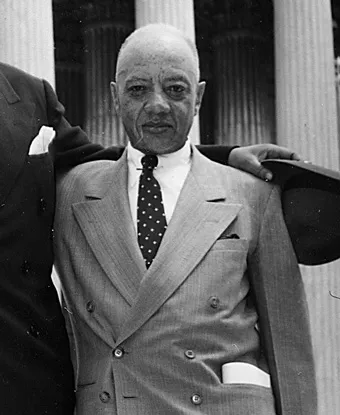 Photo: James Nabrit Jr., via www.nps.gov
Nabrit went on to argue civil rights cases that reshaped American law, eventually serving as president of Howard University and as US Ambassador to the United Nations. In the courtroom, his speech — deliberate, carefully paced, built around pauses that his opponents often mistook for hesitation — became a kind of weapon. He never spoke carelessly. He couldn't afford to. Every word had been fought for, and juries and judges felt the weight of that.
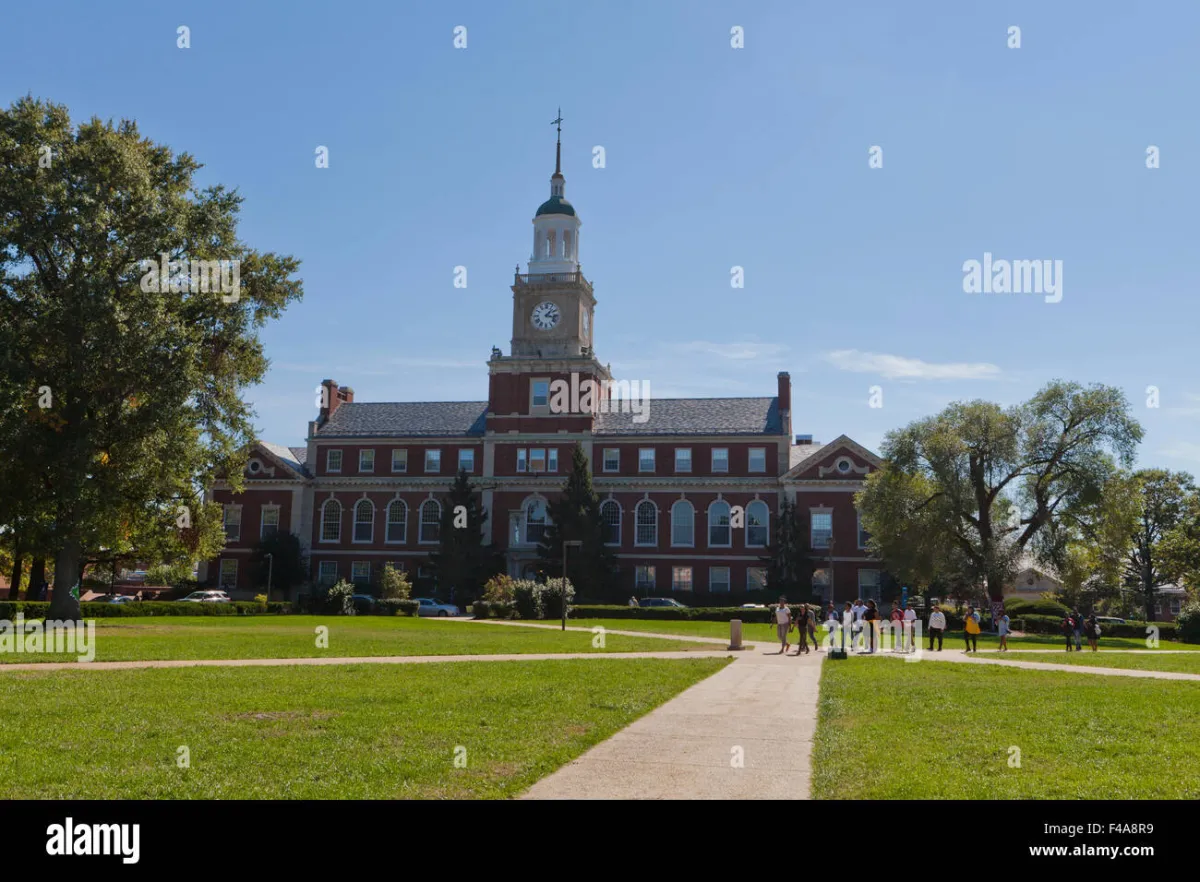 Photo: Howard University, via c8.alamy.com
People who worked alongside him later said that his stammer had taught him something most lawyers never learn: that silence, deployed correctly, is more powerful than fluency.
3. The Politician Whose Pause Became His Signature
In the rough-and-tumble world of early twentieth century American politics, where speeches were performances and confidence was currency, a speech impediment could end a career before it started. For one Southern senator whose name has faded from popular memory but whose legislative record hasn't, the stammer was a constant companion — and eventually, a strange advantage.
His colleagues initially underestimated him. His floor speeches were slow, halting, occasionally painful to witness. But what they contained was unusually precise. Because he couldn't afford verbal filler — because every word cost him something — he had developed the habit of saying only what he actually meant.
In a chamber full of men who talked at great length and said very little, his halting precision stood out. He became known, over a thirty-year career, as the man you listened to when he finally spoke, because he never spoke without reason. The impediment that was supposed to disqualify him had, in a roundabout way, built his reputation.
4. The Evangelist Who Turned the Microphone Into a Lifeline
When broadcast radio transformed American religious life in the 1920s and 30s, it created an unexpected problem for one of the country's most passionate evangelists: the microphone amplified everything, including the stammer he had spent years learning to manage in person.
Rather than retreat from radio, he adapted to it. He worked with audio engineers to understand how pacing and breath control could shape a broadcast performance. He developed a speaking style that used rhythm — almost musical in its cadence — to carry listeners through the moments where words came hard. His broadcasts became among the most popular religious programs of the era.
What his listeners responded to, he later said in interviews, wasn't polish. It was authenticity. They could hear that speaking cost him something, and that made what he said feel earned rather than performed. The stammer he had tried to hide became, on air, the thing that made him real.
5. The Activist Who Turned Silence Into Protest
In the civil rights movement of the 1950s and 60s, where rhetoric was both weapon and shield, one organizer in the Deep South carried a speech impediment that made traditional oratory nearly impossible. She was not the face of rallies. She was not the voice on the radio. She worked in the margins — organizing, documenting, building the infrastructure that made the movement function.
But she spoke at local meetings, church gatherings, small rooms full of people who needed to hear that resistance was possible. And what she said in those rooms — slowly, with effort, with the kind of deliberateness that her impediment demanded — was remembered by the people who heard it long after the famous speeches had faded.
She was never famous. She was never meant to be the speaker. But the people she reached in those small rooms carried her words forward, and the movement she helped build changed the country.
She once told a colleague that she had learned early that she would never be able to talk her way through anything. So she had learned, instead, to mean every word.
What the Struggle Built
These five lives don't share a single narrative arc. They don't all triumph in the same way or on the same stage. What they share is something subtler: a relationship to language that was forged in difficulty and therefore ran deeper than fluency ever could.
For most of us, words are cheap. We use them carelessly, reflexively, in quantities that dilute whatever meaning we intended. For people who had to fight for every sentence, that carelessness was never an option. They learned, through necessity, to be precise. To be certain. To say only what they were willing to pay for.
And it turned out that the world was hungry for exactly that.
The stammer didn't give them their voice. But it shaped the voice they found — made it harder, clearer, more impossible to ignore. The struggle to speak was, in the end, the thing that made speaking matter.