They Lost Everything. Then They Grew Something America Needed.
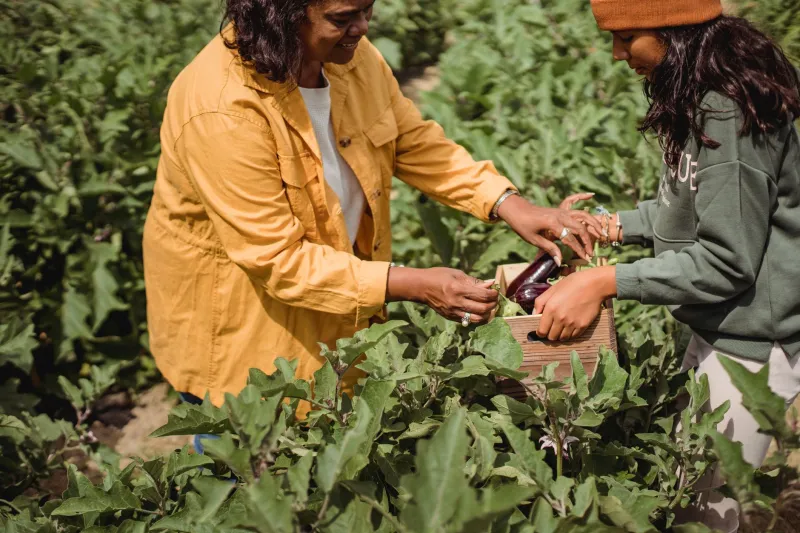
The foreclosure notice arrived on a Tuesday. Ruth Haskell remembers the day with the kind of precision that only comes from a memory you've spent years trying to outrun. February 1987. The ground was frozen solid. Her husband, Dennis, read the document twice at the kitchen table, folded it carefully, and set it down like it might detonate.
They had farmed that land outside of Ames, Iowa for eleven years. Dennis's parents had farmed it before them. The debt that swallowed it was a product of the 1980s farm crisis — a brutal collision of falling commodity prices, rising interest rates, and the kind of bank lending that made expansion look safe right up until it wasn't.
They weren't alone. Between 1981 and 1988, roughly 300,000 American farms went under. The Haskells were one family in a catastrophe. But what they did next was singular.
Starting Over with Nothing but Knowledge
After the foreclosure, Ruth and Dennis moved to a rented property — fourteen acres, barely enough to call a farm, but enough to work. They had two kids in middle school, a truck with 140,000 miles on it, and a collective agricultural knowledge that decades of bank debt couldn't repossess.
The conventional path for displaced farm families was to find off-farm work. Many did. Dennis took shifts at a grain elevator. Ruth cleaned offices three mornings a week. But neither of them could let go of the idea of farming, and in the evenings, around the kitchen table that had replaced the foreclosed one, they started asking a different kind of question.
Not "how do we get back what we lost?" but "why did it fail in the first place?"
The answer, as they came to understand it, was distance. They had been growing food for a market they never saw, sold through brokers and cooperatives and distributors, priced by forces so far removed from their fields that a bad year in a Chicago trading pit could destroy an Iowa family that had never set foot in Chicago. They were producing food without any relationship to the people eating it.
What if they changed that?
The Radical Idea of Selling Directly
In the spring of 1989, Ruth drafted a one-page letter. It described their farm, their growing practices, and a proposal: for a flat fee paid upfront at the start of the season, a household could receive a weekly box of whatever the farm produced — vegetables, herbs, eggs, occasionally fruit — from May through October.
She called it a "farm share." The idea wasn't entirely new; community-supported agriculture had been pioneered in Japan in the 1960s and had appeared in small pockets of New England by the mid-1980s. But in rural Iowa, in 1989, it was close enough to radical that most people Ruth approached thought she was describing some kind of commune.
She mailed the letter to forty families. Twelve signed up.
That first season was imperfect in almost every way. The tomatoes came in late. A hailstorm wiped out the sweet corn. One family complained every single week and still renewed for the following year, which Ruth has always taken as a sign that the model worked even when the crops didn't.
By 1991, they had thirty-two member households. By 1993, sixty-seven. A waiting list had formed.
What the Money Actually Changed
The financial logic of the CSA model was, for the Haskells, almost miraculous compared to what they'd known before. Payment came in before the season started, which meant they could buy seeds and supplies without going to a bank. If a crop failed, the loss was shared across the membership rather than absorbed entirely by the farm. And because they were selling directly — no broker, no distributor, no retailer taking a cut — the margins were incomparable to commodity farming.
They weren't getting rich. But they weren't getting buried, either.
More than the finances, though, was the relationship. Member families started showing up on weekends to see where their food came from. Kids who had never seen a vegetable growing in soil pulled carrots out of the ground and ate them standing in the field. Ruth started hosting informal dinners at the farm, potlucks where members brought dishes made from that week's box.
It sounds quaint now, in an era when farm dinners and agritourism are established revenue streams. In 1992 Iowa, it was genuinely strange. And it was working.
Spreading the Blueprint
By the mid-1990s, the Haskells had become something neither of them had planned to be: advocates. Other farm families, some of them also foreclosure survivors, started calling to ask how the model worked. Ruth spent evenings on the phone walking strangers through the subscription structure, the logistics of weekly distribution, the legal basics of member agreements.
Dennis began presenting at agricultural extension meetings, rooms full of farmers who had spent their whole lives being told that scale and commodity markets were the only path forward. He wasn't a polished speaker. He was a guy who had lost his farm and built something smaller and sturdier from the rubble, and that was enough.
The national count of CSA farms in the United States was fewer than 100 in 1990. By 2000, it was over 1,000. By 2010, estimates ranged from 12,000 to 17,000. The USDA began tracking the model formally. Academic programs in sustainable agriculture started citing the structure the Haskells had been running out of their rented fourteen acres.
The Haskells eventually bought land again — twenty-two acres, purchased outright, no bank involved. They paid for it slowly, over years, with farm share fees.
The Thing About Losing
Ruth Haskell has given enough interviews over the years that she's developed a practiced way of talking about the foreclosure — not as trauma, exactly, but as a kind of violent clarification. "We stopped asking what farming was supposed to look like," she's said, "and started asking what it needed to do."
What it needed to do, it turned out, was connect people. To the land, to the people working it, to the reality of where food comes from and what it costs to grow it honestly. The industrial food system had spent decades making that connection invisible. The Haskells, broke and desperate and out of alternatives, accidentally built something that made it visible again.
They didn't set out to spark a movement. They set out to survive. But survival, when it's creative enough, has a way of becoming something larger than itself. The American local food system — the farmers markets, the CSA boxes, the farm-to-table ethos that has reshaped how millions of people eat — has many parents. Ruth and Dennis Haskell, standing in a frozen Iowa driveway with a foreclosure notice in hand, are among the most unlikely of them.