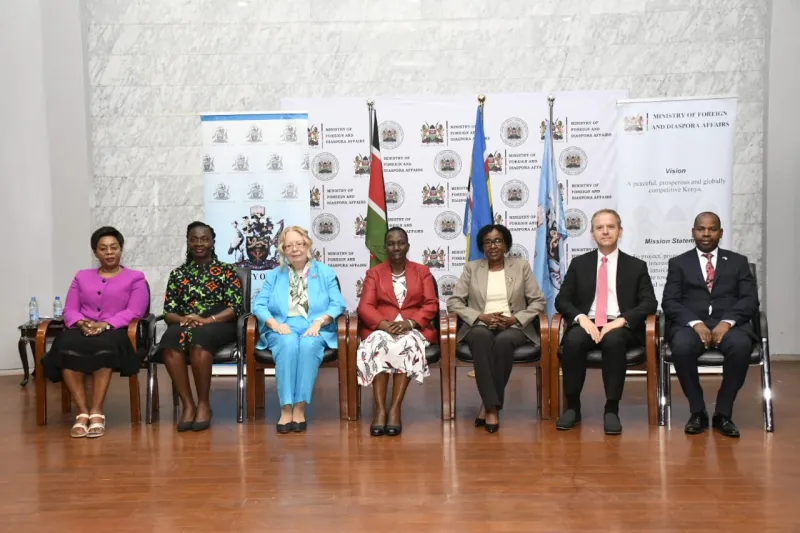
Photo: woman diplomat negotiation table international meeting professional, via idis.uonbi.ac.ke
The first language Gloria Reyes ever translated wasn't Spanish to English. It was silence to survival.
Growing up on the eastern fringe of Youngstown, Ohio, in the late 1970s, Gloria learned early that words were currency — and that most of the adults around her were being shortchanged. Her father, Miguel, drove a municipal garbage truck six days a week. Her mother cleaned hotel rooms. Neither spoke English well enough to argue with a landlord, a school administrator, or a hospital billing department. So Gloria did it for them. By the time she was eleven, she was the de facto spokesperson for half her block.
 Photo: Youngstown, Ohio, via thumbs.dreamstime.com
That's not a metaphor. She was literally the kid neighbors knocked on the door for when the utility company sent a shutoff notice.
The Neighborhood Was the Classroom
Youngstown in that era was a city mid-collapse. The steel mills had started closing. Unemployment was brutal. The neighborhoods where immigrant families clustered — Polish, Puerto Rican, Slovak, Mexican — were patchwork communities held together by mutual dependence more than anything the city offered.
For Gloria, this was an education in human dynamics that no textbook could replicate. She learned to read body language before she could fully read English. She understood that a raised eyebrow from a city official meant something different than the same gesture from a neighbor's grandmother. She absorbed the rhythms of how different cultures expressed trust, suspicion, urgency, and respect.
She also worked. Double shifts at a grocery store through high school. Waitressing on weekends. By the time she graduated — first in her family to do so — she had saved enough to enroll at Youngstown State, where she studied political science and, almost accidentally, fell into a linguistics seminar that changed everything.
 Photo: Youngstown State, via d2607mcc9g3c6f.cloudfront.net
"I didn't know there was a name for what I'd been doing my whole life," she later told a State Department oral history project. "I just thought I was translating. Turns out I was code-switching, reading power dynamics, managing cross-cultural negotiation. I'd been doing diplomacy since I was ten."
The Door Nobody Opened
The U.S. Foreign Service exam is notoriously difficult. It's also, historically, a pipeline that rewards a very specific kind of applicant: Ivy-educated, well-traveled, fluent in the kind of cultural capital that comes from growing up with money and opportunity. Gloria was none of those things.
She failed the written exam the first time. Passed on her second attempt. Then came the oral assessment — a day-long gauntlet of role-playing scenarios, group exercises, and structured interviews designed to evaluate judgment, communication, and leadership under pressure.
The evaluators noted, in her feedback, that she had an "unusual ability to de-escalate tension in group settings" and "demonstrated instinctive awareness of interpersonal dynamics." What they were describing, without knowing it, was a childhood spent mediating between worlds that didn't share a language.
She joined the Foreign Service in 1994, assigned first to a consular post in Mexico City — work that most new officers found unglamorous but that Gloria attacked with the same intensity she'd brought to every double shift at the grocery store.
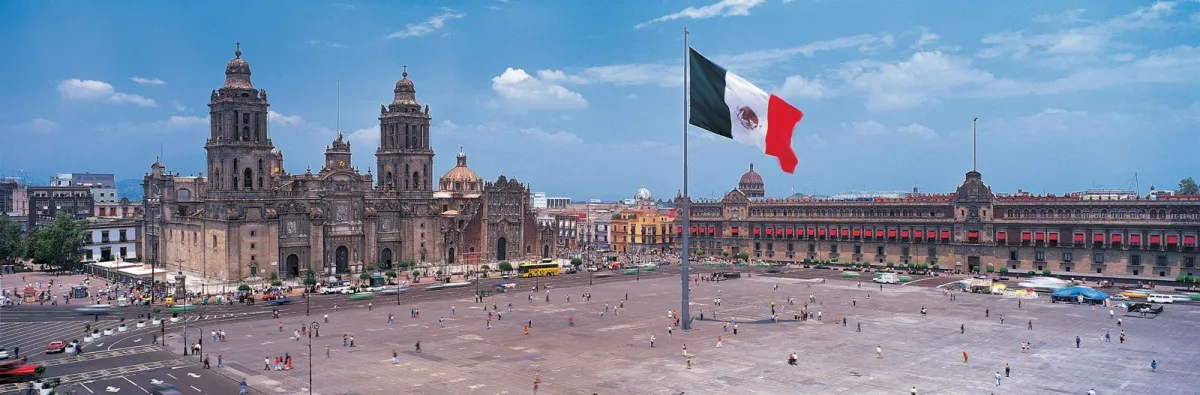 Photo: Mexico City, via cdn.britannica.com
The Instincts Nobody Taught
Her colleagues at the consulate were, by and large, excellent. Educated. Prepared. Deeply versed in policy and protocol. What many of them lacked was the ability to sit across from someone who had every reason to distrust the American government and make that person feel genuinely heard.
Gloria had spent her childhood doing exactly that. She knew what it felt like to be on the other side of a desk, holding paperwork you didn't fully understand, hoping the person with the stamp was going to treat you like a human being.
That instinct — call it empathy, call it street intelligence, call it whatever you want — turned out to be extraordinarily valuable in trade negotiation rooms, where the official text of an agreement is often the least important thing happening. The real work is about trust. About reading whether the person across the table is telling you what they mean or telling you what they think you want to hear.
Over the next two decades, Gloria moved through postings in Latin America, Southeast Asia, and eventually Europe. She became a specialist in bilateral trade agreements, particularly in sectors involving labor protections and agricultural imports — areas where the human stakes were high and the political sensitivities were higher.
Former colleagues describe her as someone who could walk into a negotiation that had been stuck for months and find the emotional fault line within an hour. "She'd ask a question nobody else thought to ask," one senior diplomat recalled. "And suddenly the whole room shifted."
What the Ivy League Couldn't Teach
This is not a story about Gloria being better than her credentialed colleagues. Most of them were brilliant, and she'd be the first to say so. It's a story about what gets left out of the standard formula for who belongs in a room.
The foreign policy world, like most elite professional spaces, has long operated on the assumption that the right preparation looks a certain way: the right schools, the right internships, the right language of presentation. Gloria's preparation looked nothing like that. It looked like navigating a Rust Belt city on behalf of people who had no other options.
But those experiences gave her something that couldn't be acquired in a seminar. She understood, viscerally, what it meant to need something from a system that wasn't built for you. That understanding made her dangerous in a negotiating room — in the best possible way.
By the time she retired from the Foreign Service in 2019, she had helped broker agreements affecting trade flows worth tens of billions of dollars. She had been posted to six countries. She had trained a generation of younger officers, many of them, deliberately, from non-traditional backgrounds.
The Unlikely Tool Kit
Gloria's father, Miguel, died in 2011. He never fully understood what his daughter did for a living, she has said — the titles were too abstract, the geography too distant. But he understood that she talked to important people on behalf of America, and that was enough.
What he probably didn't know — what most people don't know about diplomatic work — is how much of it comes down to the same skills he modeled every day before sunrise: showing up, doing the work nobody else wanted to do, and earning trust one interaction at a time.
The garbage collector's daughter didn't become a diplomat despite where she came from. She became one because of it. The neighborhood that looked like a disadvantage was, the whole time, a master class in exactly the skills the world's most sophisticated negotiating rooms required.
She just had to get into the room first.