The Man the System Forgot to Watch: How a Prison Librarian Quietly Freed Forty-Three People
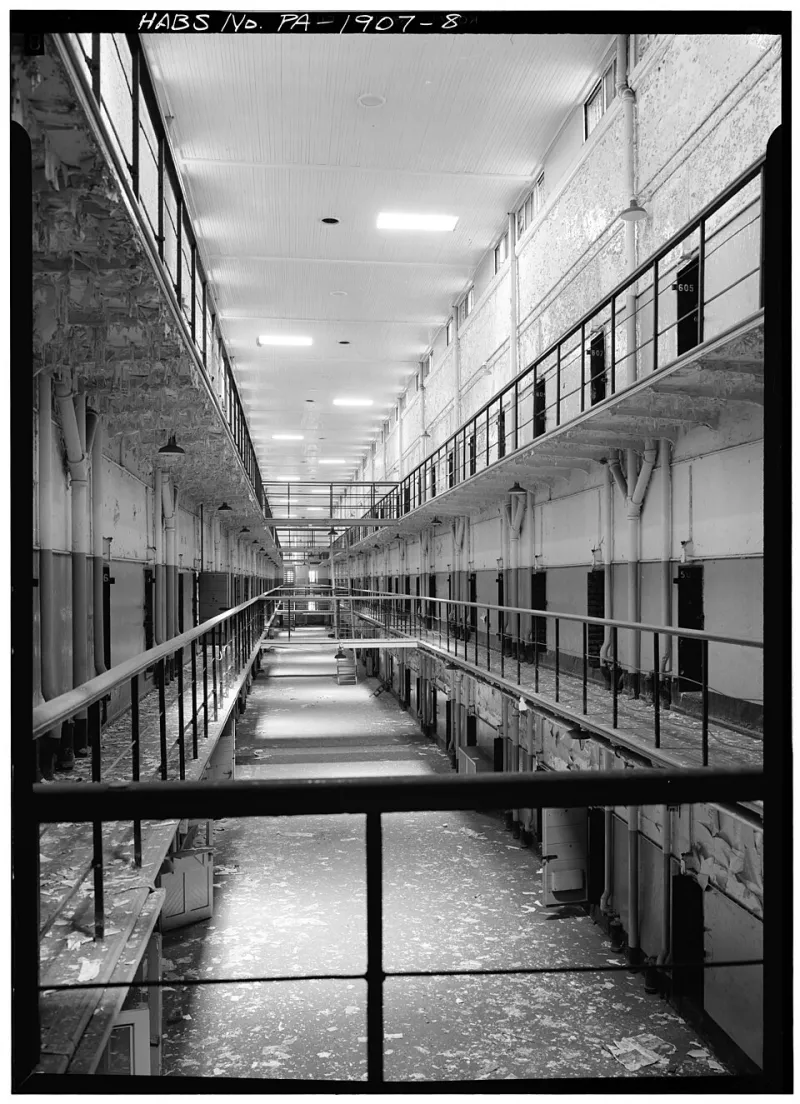
Photo: Library of Congress, Public domain, via Wikimedia Commons
There is a particular kind of invisibility that institutions produce without meaning to. The maintenance worker. The file clerk. The librarian. These are people the system relies on completely and notices almost not at all — and in that gap between reliance and attention, remarkable things occasionally happen.
Calvin Marsh understood this better than most. He worked inside a state penitentiary for twenty-two years, managing a law library that most of the administration considered a bureaucratic formality. He was paid to shelve books, maintain periodical subscriptions, and keep the room orderly. What he actually did, in the hours between those tasks, was become one of the most effective wrongful-conviction advocates in the history of American criminal justice.
 Photo: Calvin Marsh, via townlift.com
He had no law degree. He had never taken a bar exam. What he had was time, access, and the institutional superpower of being the person nobody thinks to watch.
How It Started
Marsh arrived at the Kellerton Correctional Facility in rural Ohio in 1989, hired through a state civil service program that placed non-incarcerated workers in support roles inside the prison system. He was twenty-nine, had a two-year library science certificate from a community college, and needed a steady paycheck. The job paid modestly and required nothing more than basic organizational competence.
 Photo: Kellerton Correctional Facility, via theprisondirect.com
The law library he inherited was a mess — outdated volumes, misfiled case reporters, a periodical backlog going back three years. He spent his first six months simply getting the collection into usable shape. In doing so, he read almost everything he filed.
"I wasn't trying to learn the law," he said in a 2014 interview with a legal aid organization in Columbus. "I just couldn't put books away without reading them. That's always been my problem."
By the end of his first year, he had a working knowledge of Ohio criminal procedure that exceeded what many practicing attorneys maintained. By the end of his third, he had started noticing things.
What He Saw That Others Didn't
Prison law libraries exist, technically, to satisfy the constitutional requirement established in Bounds v. Smith (1977) — the Supreme Court's ruling that inmates have a right of access to the courts. In practice, most incarcerated people using these libraries have limited legal training, limited time, and limited ability to navigate the procedural complexity of post-conviction appeals.
Marsh began helping informally. A man on his block asked him to explain a habeas corpus filing. He explained it. Then he helped draft it. Then he started looking at the underlying case file.
What he found, in that first case, was a Brady violation — the prosecution had withheld exculpatory evidence that might have changed the jury's decision. It wasn't buried. It was sitting in the case record, accessible to anyone who knew what they were looking for and had the patience to look.
That inmate's conviction was overturned in 1994. Marsh had found the thread. He spent the next eighteen years pulling it.
The System Inside the System
Over two decades, Marsh developed what colleagues at the Ohio Innocence Project — who eventually became aware of his work and began collaborating with him — described as a "remarkably systematic" approach to case review. He maintained his own index of active cases, cross-referenced by conviction type, evidence category, and appellate history. He tracked changes in case law that might retroactively affect convictions. He corresponded with law school clinics, civil rights organizations, and pro bono attorneys across the state.
All of this happened in a prison law library, between shelving shifts, on institutional time that nobody was monitoring closely enough to question.
The invisibility was intentional. Marsh understood, intuitively, that the moment his work attracted administrative attention, it would attract administrative interference. So he kept the room clean, attended every staff meeting, submitted every required report on time, and never gave anyone a reason to look at what he was actually doing.
"He was the most buttoned-up employee in that facility," a former warden told a reporter from the Columbus Dispatch in 2016. "Never a complaint, never an incident. I'm not sure I could have told you what he looked like."
That was exactly the point.
Forty-Three Names
The number forty-three is the one that gets cited most often, and it requires some context. Of the cases Marsh worked on directly — drafting initial appeals, identifying legal errors, building the factual records that outside attorneys then litigated — forty-three resulted in overturned convictions or significantly reduced sentences. The actual number of cases he touched, including informal consultations and preliminary reviews that didn't advance, runs into the hundreds.
The forty-three include people convicted of violent crimes who had been incarcerated for decades. They include people whose convictions rested on eyewitness testimony later discredited by DNA evidence — evidence that Marsh, reading ahead of the curve in legal journals, had begun flagging as unreliable years before the broader legal community caught up. They include at least seven people who, by the assessment of the attorneys who ultimately argued their cases, would never have had their appeals heard without the foundational work Marsh had already done.
None of those forty-three people were freed by Calvin Marsh, technically. He had no legal standing to free anyone. What he did was build the case that someone with standing could then carry across the finish line.
The American Tradition He Belongs To
There is a long history in this country of justice being pursued from the margins — by people who had no institutional standing, no formal credentials, and no official permission to do what they were doing. Jailhouse lawyers have been a feature of American incarceration since the nineteenth century, men and women who educated themselves in law out of necessity and used that education to fight for themselves and others. The courts have had a complicated relationship with this tradition, alternately protecting and restricting it.
Marsh sits in a slightly different category — he was never incarcerated himself, which gave him a freedom of movement and access that most jailhouse lawyers lack. But his method belongs to the same tradition: self-education as resistance, institutional invisibility as strategy, and the radical idea that the law, if you understand it well enough, can be made to work for the people it most often fails.
He retired from Kellerton in 2011. He spent the following decade working as a volunteer legal researcher for the Ohio Innocence Project, doing openly what he had done quietly for twenty years. He has been asked, repeatedly, whether he regrets not having pursued a law degree formally.
"A law degree would have gotten me a job at a firm," he said. "The library got me forty-three."
He keeps a list. Every name on it is someone who went home.