The Door That Slammed Shut Opened Everything Else: How One Rejection Accidentally Built a Legacy
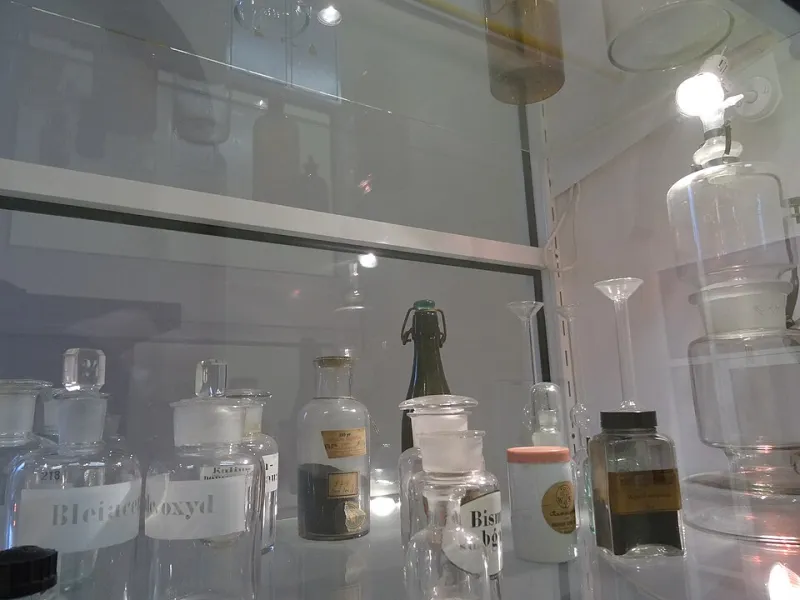
Photo: LukaszKatlewa, CC BY 4.0, via Wikimedia Commons
Alice Ball was twenty years old when she arrived at the College of Hawaii in 1914, already holding a degree in pharmaceutical chemistry from the University of Washington. She was brilliant, focused, and certain — the way only very young people can be certain — about what she was meant to do with her life.
 Photo: College of Hawaii, via www.rebellionresearch.com
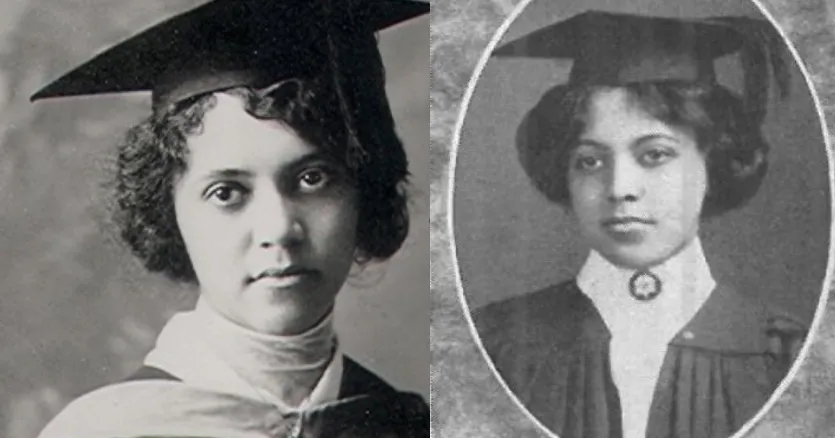 Photo: Alice Ball, via blackculturenews.com
She had not planned to save anyone. She had not planned to disappear from history. She had not planned to have her work stolen, her name erased, or her contribution quietly reassigned to a man who had done none of it. She had planned, simply, to do good science and be recognized for it.
Life had other ideas.
What She Wanted
To understand what Alice Ball built, you have to understand what she was turned away from — or more precisely, what the world around her refused to give her access to.
Ball had grown up in a family that took education seriously. Her grandfather was a well-known photographer; her father was a lawyer. Intellectual ambition was the household air. When she arrived in Hawaii as a graduate student, she was one of the few women in her program and the only Black student in her cohort. She was not welcomed warmly by a field that had not been designed with her in mind.
The formal doors — the faculty positions, the research fellowships, the institutional support that turned promising scientists into celebrated ones — were not open to her. Not really. Not in 1914 in a field dominated by white men who had never had to consider whether the room was built for them.
So she worked in the spaces that were available. And in those spaces, she did something extraordinary.
The Problem Nobody Had Solved
For centuries, leprosy — now known as Hansen's disease — had been one of the most feared and misunderstood conditions in human history. Patients in Hawaii, where the disease had devastated communities, were forcibly quarantined on the island of Molokai, separated from their families, stripped of their ordinary lives. There was no effective treatment.
Chaulmoogra oil, derived from the seeds of a tree native to South and Southeast Asia, had long been used in traditional medicine as a topical treatment for skin conditions associated with leprosy. The problem was that it couldn't be injected. Its chemical composition made it impossible to introduce into the bloodstream in a usable form — it was too viscous, too unstable, too resistant to the body's absorption systems. Doctors had tried and failed for decades.
Alice Ball, working in a laboratory at the College of Hawaii with equipment that was adequate at best, cracked the problem in less than a year.
She developed a method of isolating the active chemical compounds in chaulmoogra oil and converting them into a water-soluble, injectable form. The process required sophisticated understanding of organic chemistry and a willingness to iterate through failures that would have discouraged a less committed mind. She was twenty-one years old when she succeeded.
The Theft She Never Knew About
Ball died in 1916, just two years after her breakthrough, at the age of twenty-four. The cause of her death remains disputed — some accounts suggest accidental chlorine poisoning during a laboratory demonstration; others are less certain. She died before she could publish her findings.
What happened next is one of the more uncomfortable chapters in the history of American science.
Arthur Dean, the president of the College of Hawaii, published Ball's research without crediting her. He called the method the "Dean Method" and presented it as his own development. For years, the injectable chaulmoogra treatment — which was used successfully on leprosy patients across Hawaii and beyond, allowing many to return from quarantine to their families — was attributed entirely to him.
One man, Jordon, a colleague who had known Ball, tried to set the record straight in a 1922 journal article. He named her explicitly, described her work, and called for her to receive proper credit. His account was largely ignored.
Alice Ball disappeared from the story of her own discovery for nearly eighty years.
The Recovery
In the 1990s, a University of Hawaii at Manoa researcher named Paul Wermager began digging into the historical record, driven by a nagging sense that the official account of the chaulmoogra breakthrough didn't add up. What he found confirmed what Jordon had written decades earlier: the work had been Ball's, start to finish.
In 2000, the University of Hawaii formally acknowledged Alice Ball's contribution. The governor of Hawaii declared February 29th Alice Ball Day. A plaque was placed near the chaulmoogra tree on the Manoa campus — the same species whose seeds she had unlocked.
It was recognition that arrived eighty-four years too late for her to receive it. But it arrived.
The Pivot That Changed Everything
Here is the part of Alice Ball's story that doesn't fit neatly into the standard narrative of triumph over adversity: she didn't overcome the barriers in front of her. She worked around them. The formal recognition she deserved was denied to her both in life and for most of a century after her death. The system did not bend for her.
What she did — and what makes her story worth sitting with — is refuse to let the closed doors determine the limits of what she attempted. When the prestigious fellowships weren't available, she worked in the lab that was. When the academic establishment wasn't going to hand her a platform, she built her findings quietly, without one.
The rejection wasn't the pivot point. She was too focused on the work to experience it as a pivot. The rejection was simply the landscape she operated in — the set of conditions she had been given, which she declined to treat as the final word on what was possible.
What Her Story Actually Argues
We tell stories about rejection and redirection because they're comforting. The door closes; a window opens; the hero finds their true calling. It's a narrative that makes adversity feel purposeful, setbacks feel designed.
Alice Ball's story doesn't offer that comfort. She didn't fail at one thing and accidentally succeed at another. She succeeded at exactly what she set out to do, and the world around her failed to acknowledge it. The tragedy is real. The injustice is real.
But the work is also real. The patients who returned to their families because of her injectable treatment — they were real. The science that bore her name, finally, after eight decades of erasure — it endures.
She walked into a field that didn't want her and solved a problem it had given up on. The legacy she built wasn't the one she planned, because no one plans to be erased. But it was built nonetheless, in a laboratory in Hawaii, by a twenty-one-year-old woman who was too focused on the problem in front of her to wait for the world to be ready.
It wasn't ready. She didn't wait.
She built it anyway.