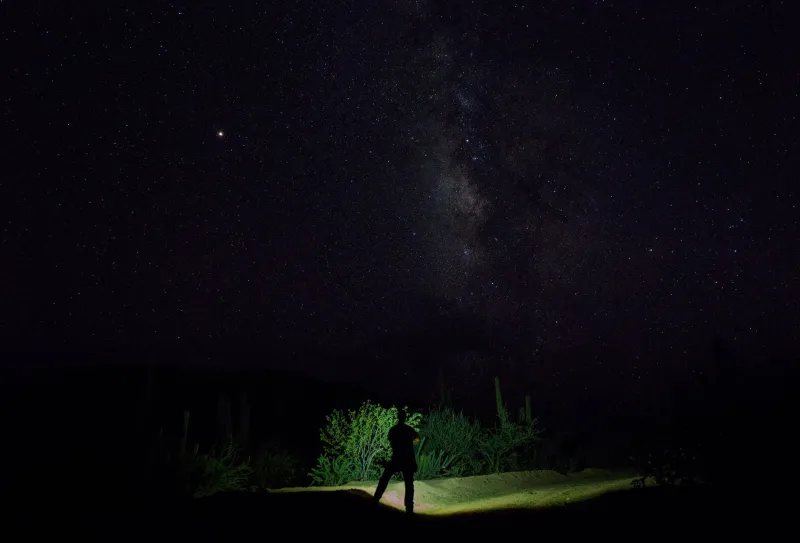
Hector Serrano never owned a telescope. He never took a class in astronomy, never read a textbook in any language, never attended a lecture or joined a society or submitted a paper to a journal. What he had was sheep, silence, and the clearest skies in the American Southwest — and he used all three in ways that would eventually embarrass people with far more impressive credentials.
 Photo: Hector Serrano, via static.ecestaticos.com
For roughly thirty years, from the late 1940s through the 1970s, Serrano worked the high desert hills outside of Magdalena, New Mexico, tending flocks that belonged to other men while keeping a private record that belonged entirely to himself. Every clear night, after the animals had settled, he would lie back on the hardpack and watch. And then, by firelight or early morning sun, he would draw what he had seen.
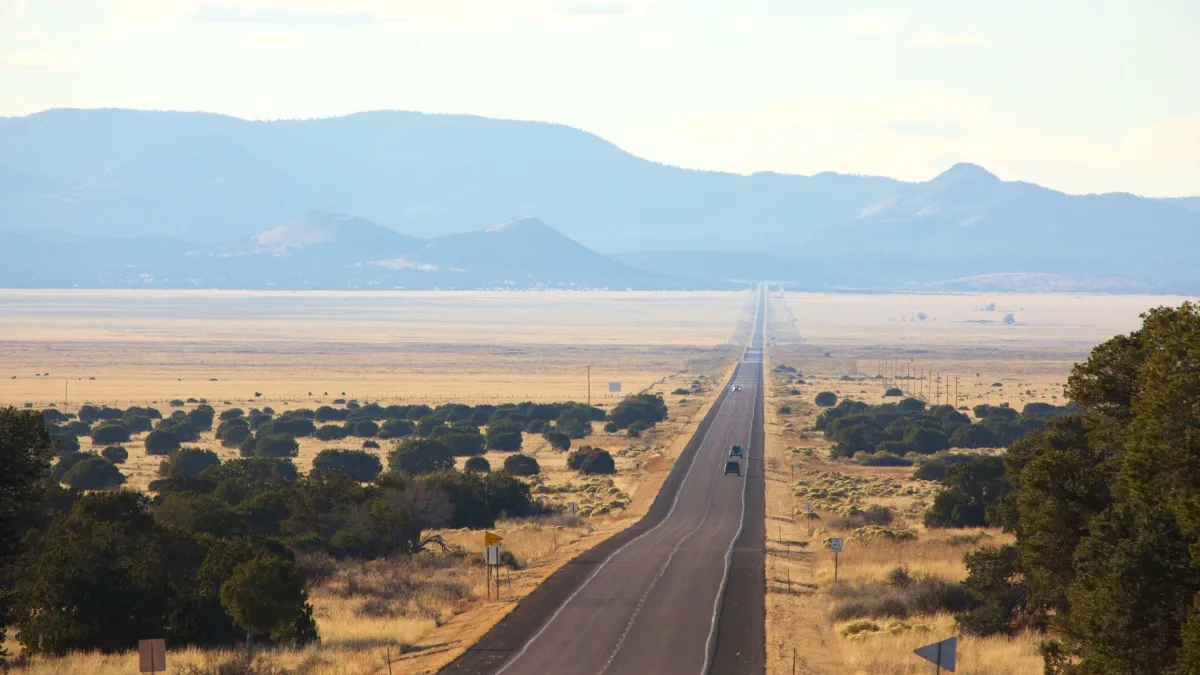 Photo: Magdalena, New Mexico, via a.travel-assets.com
Paper, Patience, and a Very Long Night
His materials were modest by any standard. Old flour sacks. The backs of feed store receipts. Occasionally, the margins of Spanish-language newspapers that made their way up from Socorro. He used whatever pencils he could get his hands on, and when those ran out, a piece of charcoal from the fire did the job well enough.
What Serrano was building, entirely without knowing what to call it, was a systematic chart of stellar positions as observed from a fixed geographic point at specific times of year. He tracked the same stars across seasons, noting when they appeared, where they sat relative to one another, and how that relationship shifted over time. He had no formal framework for what he was doing. He simply found the sky interesting and the work calming, and thirty years of calm attention turned out to be worth something extraordinary.
The story might have ended there — a private obsession, remarkable in its own quiet way, but ultimately unknown — if a University of Arizona astronomer named Dr. Patricia Voss hadn't been driving through Socorro County in the spring of 1974, following up on reports of unusually dark skies in the region as part of a site survey for a potential observatory.
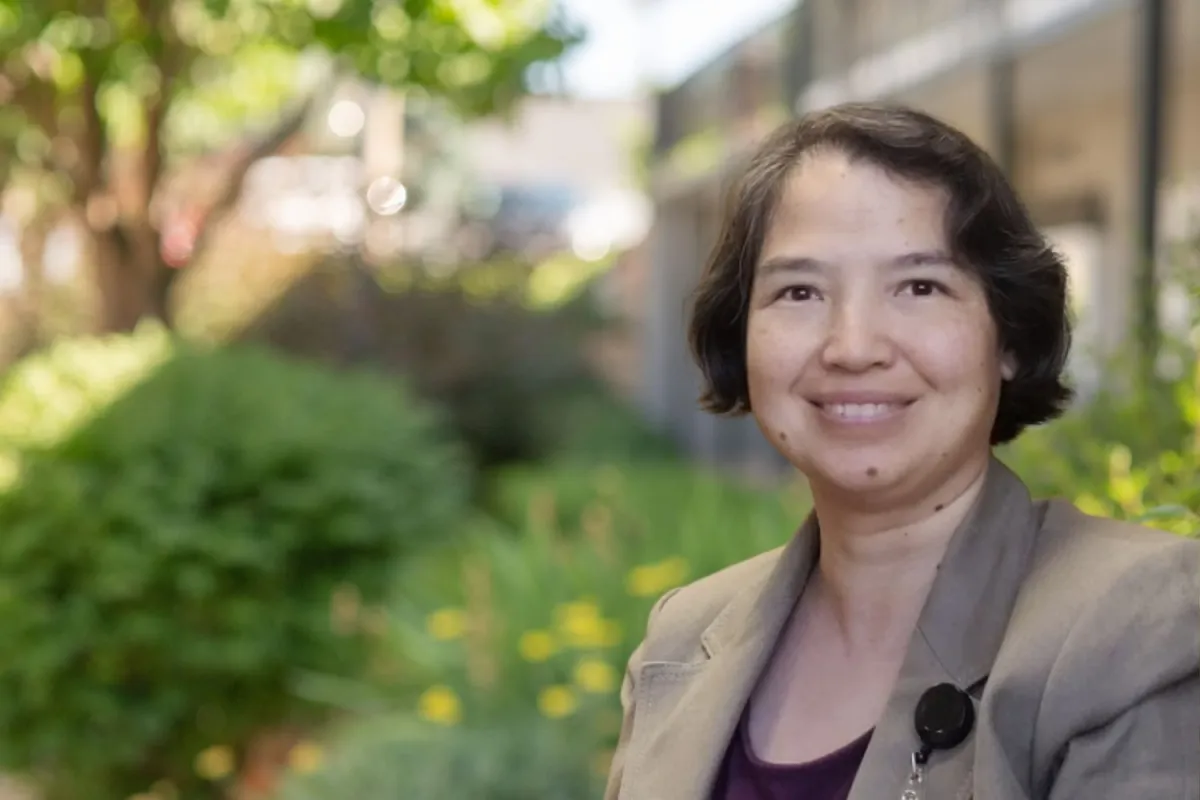 Photo: Dr. Patricia Voss, via images.squarespace-cdn.com
She stopped at a general store. Someone mentioned the shepherd who drew the stars. She drove up the hill.
What the Margins Can See
Voss later described the moment she unrolled Serrano's maps as one of the more disorienting experiences of her professional life. Not because the drawings were primitive — they were, in the way that all handmade things are — but because several of them were right in ways that contradicted what was printed in the reference atlases she carried in the back of her truck.
The discrepancies were small. We're not talking about Serrano discovering a new galaxy or rewriting Newtonian physics. What he had caught, through decades of patient naked-eye observation from a consistent vantage point at roughly 6,500 feet elevation, were positional errors that had been quietly propagated through successive editions of widely used star charts. Small angular miscalculations, the kind that accumulate when you copy from a copy of a copy. The kind that credentialed astronomers, working from existing sources rather than the sky itself, had no particular reason to question.
Serrano had no existing sources. He only had the sky.
Voss brought several of his charts back to Tucson. She shared them with colleagues. The response, by her own account, was a mixture of genuine scientific interest and barely concealed institutional discomfort — the particular unease that sets in when someone without a degree turns out to have been paying closer attention than the people with them.
What Isolation Gave Him
It's worth sitting with what actually made Serrano's observations possible. It wasn't genius in the lightning-bolt sense. It was something slower and less glamorous: the specific freedom that comes from having no received wisdom to defer to.
Every trained astronomer who worked with star charts in the mid-twentieth century was working within a tradition. They trusted the atlases because the atlases came from other astronomers they trusted. That's not a flaw — it's how science builds on itself. But it does mean that certain errors can achieve a kind of institutional permanence. Nobody goes back to check the original sky because everyone assumes someone already did.
Serrano checked the original sky every night for thirty years because it was the only source he had.
His isolation, the very thing that would have disqualified him from any formal conversation about astronomy, was the condition that made his contribution possible. He had no charts to copy from. He had no authority to defer to. He just had the dark and the patience to keep looking.
The Quiet Aftermath
Serrano was in his late fifties when Voss found him. He spoke limited English and showed, by all accounts, relatively little interest in the academic stir his maps created. He was pleased that someone found them useful. He kept tending sheep.
Voss published a paper in 1976 that referenced his observations and credited him by name — an act that was, in the context of academic publishing at the time, more generous than it might sound. His maps were archived at the University of Arizona. A small notice appeared in a New Mexico newspaper. And then, largely, the world moved on.
But the story of what Hector Serrano did on those hillsides doesn't really need institutional validation to mean something. It's a story about what becomes visible when you remove all the noise — the textbooks, the conferences, the pressure to confirm what's already known — and just look.
The universe, it turns out, doesn't care whether you have a degree. It just keeps being there, waiting for someone patient enough to pay attention.
Serrano paid attention for thirty years. That's the whole story. And somehow, it's enough.