The Woman Who Knew Her Body Better Than Her Doctors
The Patient Who Became Her Own Researcher
Martha Chen couldn't get anyone to listen. For months in 1923, the 28-year-old schoolteacher from Portland, Oregon, had been experiencing episodes that left her disoriented, nauseous, and struggling to form words. When she tried to describe these symptoms to doctors, they dismissed her as "hysterical" and "attention-seeking."
 Photo: Portland, Oregon, via thumbs.dreamstime.com
When Chen became increasingly insistent that something was seriously wrong, her family had her committed to the Oregon State Hospital. The diagnosis: "female hysteria with obsessive tendencies."
 Photo: Oregon State Hospital, via oregondiscovery.com
What no one knew—including Chen herself—was that she was about to conduct one of the most detailed medical case studies in American history.
The Notebook That Changed Everything
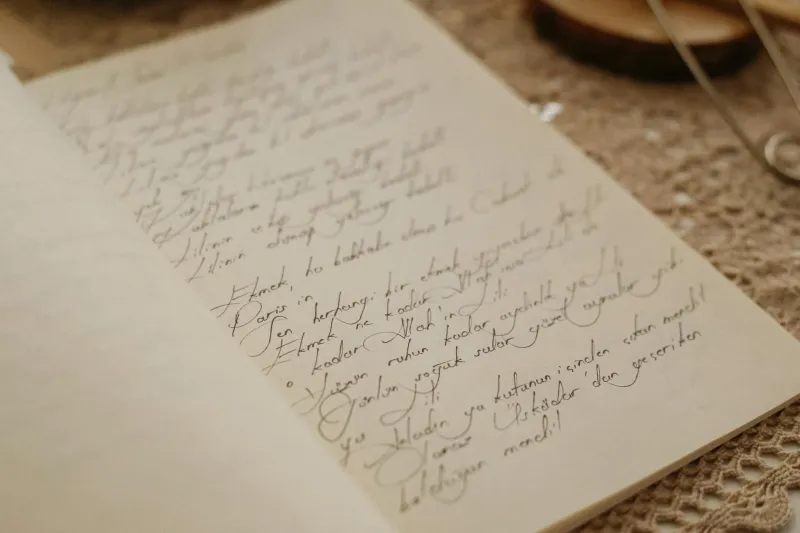
Inside the asylum, Chen did something remarkable: she began documenting her condition with the methodical precision of a trained scientist. Using a notebook smuggled to her by a sympathetic nurse, she recorded every symptom, every episode, every physical sensation she experienced.
Her entries read like clinical observations: "Day 47: Episode began 2:15 PM, preceded by metallic taste and visual disturbance—bright lights appearing in peripheral vision. Speech difficulty lasted approximately 12 minutes. Recovery gradual, with residual fatigue lasting 3 hours."
For three years, Chen filled notebook after notebook with meticulous observations that her doctors never bothered to read. When she died in the asylum in 1926, the notebooks were stored with her personal effects and forgotten.
The Discovery That Rewrote Medical History
In 1974, Dr. Patricia Williams was researching the history of women's mental health treatment when she stumbled across Chen's notebooks in the Oregon State Hospital archives. What Williams found changed her understanding of both medicine and the patients it had failed.
Chen's descriptions were clinically perfect accounts of complex partial seizures—a neurological condition that wouldn't be properly understood or named until the 1960s. Her detailed observations of aura symptoms, seizure progression, and recovery patterns matched modern medical literature with startling accuracy.
"She was describing temporal lobe epilepsy with a precision that most trained neurologists couldn't achieve," Williams later wrote. "This woman, dismissed as mentally ill, had been conducting sophisticated medical research on herself for three years."
When Patients Knew More Than Physicians
Chen's case wasn't unique—it was part of a larger pattern of medical dismissal that particularly affected women in the early 20th century. Symptoms that didn't fit understood categories were often attributed to "hysteria," and patients who persisted in describing unusual experiences were labeled as difficult or delusional.
But Chen's notebooks revealed something profound: patients experiencing unexplained conditions often understood their own bodies better than the medical establishment that was supposed to treat them. Her self-observations were more accurate than any diagnosis she received during her lifetime.
The Accidental Researcher
What made Chen's documentation so valuable wasn't just its accuracy, but its completeness. While doctors saw her for brief appointments and focused on her "difficult" behavior, Chen was conducting 24-hour surveillance of her own condition.
She noted environmental triggers (bright lights, stress, certain foods), documented patterns in her episodes (more frequent during menstruation, less common in cold weather), and tracked her body's responses with scientific rigor. Her notebooks contained data that would have taken modern researchers years to collect.
The Textbook That Cited a Ghost
In 1978, Dr. Williams published Chen's case study in the Journal of Neurological History. The response was immediate and profound. Neurologists recognized the descriptions as textbook examples of temporal lobe epilepsy, complete with details about symptom progression that hadn't been formally documented until decades after Chen's death.
Chen's observations were subsequently cited in multiple medical textbooks and research papers. A woman who had been dismissed as mentally ill became a posthumous contributor to neurological science.
The Patients Who Taught Medicine
Chen's story sparked interest in other "lost" patient accounts. Researchers began combing through asylum records, looking for detailed self-reports that had been dismissed as the ramblings of disturbed minds.
They found treasure troves of medical insight: patients who had accurately described autoimmune conditions decades before they were recognized, individuals who had documented rare genetic disorders with scientific precision, and countless people whose "delusions" were actually accurate descriptions of misunderstood medical phenomena.
The Science of Self-Knowledge
Chen's legacy extends beyond neurology. Her case helped establish the importance of patient narratives in medical diagnosis and treatment. Modern medicine now recognizes that patients' descriptions of their own experiences are crucial data points, not just subjective complaints to be dismissed.
Medical schools now teach students to listen more carefully to patient accounts, especially when symptoms don't fit recognized patterns. Chen's notebooks are sometimes used as teaching tools, demonstrating how valuable patient observations can be when approached with scientific respect rather than dismissive skepticism.
The Unlikely Medical Pioneer
Martha Chen never intended to become a medical researcher. She was simply a woman trying to understand what was happening to her own body when the medical establishment failed to help her. Her meticulous documentation was born from frustration, not scientific ambition.
Yet her work contributed more to the understanding of temporal lobe epilepsy than many formally trained researchers of her era. Her case demonstrates that some of medicine's most important insights come from the people experiencing conditions firsthand—if only the medical establishment is willing to listen.
When the Dismissed Become Essential
Today, Chen's notebooks are housed in the National Library of Medicine, where they serve as both historical artifacts and active research tools. The woman who was institutionalized for being "difficult" is now recognized as having conducted some of the most detailed neurological observations of her generation.
Her story reminds us that the patients medicine tries hardest to silence sometimes have the most important things to say. In Chen's case, three years of careful self-observation proved more valuable than decades of medical dismissal.
The schoolteacher who was locked away for knowing too much about her own body ultimately taught an entire profession how to listen better.