The Bodies That Wouldn't Quit: Five Athletes Who Turned Their Biggest Obstacles Into Record-Breaking Advantages
When Medicine Meets Miracles
In the world of elite athletics, where milliseconds separate champions from also-rans and physical perfection is often considered the baseline for entry, five American athletes rewrote the rules by succeeding not despite their disabilities, but because of how those challenges forged something unprecedented in their respective sports.
These aren't feel-good stories about overcoming obstacles—they're case studies in how the human body and spirit can transform what appears to be limitation into competitive advantage, often leaving sports scientists scrambling to understand what they're witnessing.
Jim Abbott: The Pitcher Who Redefined Impossible
When Jim Abbott was born in 1967 with only one fully developed hand, doctors assured his parents that he could live a normal life—just not one that involved professional sports. Abbott had other plans.
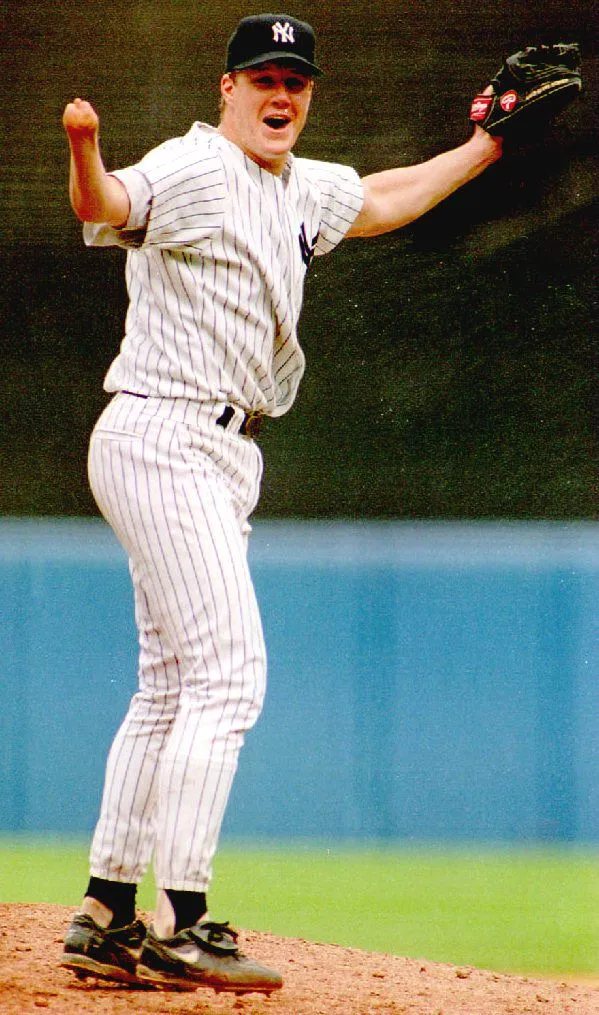 Photo: Jim Abbott, via www.the-sun.com
By age eleven, he had developed a technique that would baffle major league hitters for over a decade. He would pitch with his right hand while wearing his glove on the stub of his left wrist. Immediately after releasing the ball, he would slip his hand into the glove, ready to field. When he needed to throw to a base, he would secure the ball against his body with his glove, slip his hand out, grab the ball, and fire.
The mechanics were complex, but Abbott executed them so flawlessly that opposing batters often forgot about his disability until they saw him fielding. What could have been a weakness became a psychological weapon—hitters were so focused on his unique style that they lost concentration on the thing that mattered most: hitting a 90-mph fastball.
Abbott's crowning achievement came on September 4, 1993, when he threw a no-hitter for the New York Yankees against the Cleveland Indians. In a sport obsessed with physical perfection, a one-handed pitcher had achieved what most two-handed pitchers can only dream of.
Terence Parkin: The Swimmer Who Heard Victory
Deaf since birth, Terence Parkin couldn't hear the starting gun, the crowd, or his coach's instructions during races. In swimming, where reaction time at the start can determine the winner, this seemed like an insurmountable disadvantage.
Parkin turned it into his secret weapon.
Unable to rely on auditory cues, he developed an almost supernatural awareness of visual signals and water movement. He could sense the tension in the pool before a race started, feel the wake patterns of swimmers in adjacent lanes, and maintain perfect stroke rhythm without the auditory feedback that other swimmers depended on.
At the 2000 Sydney Olympics, Parkin won silver in the 200-meter breaststroke, finishing just 0.06 seconds behind the gold medalist. More remarkably, he did it while competing against hearing athletes in the regular Olympics, not the Paralympics. His time would have won gold in six of the previous eight Olympic Games.
 Photo: 2000 Sydney Olympics, via artworks.thetvdb.com
Coaches who studied Parkin's technique found that his stroke was more consistent than virtually any other swimmer's because he wasn't distracted by external noise. He had learned to swim from the inside out, guided by feel rather than sound.
Marla Runyan: The Runner Who Saw the Finish Line
Legally blind since childhood due to Stargardt's disease, Marla Runyan could barely make out the track she was running on, much less see her competitors clearly. In distance running, where tactics and positioning are crucial, this should have ended her career before it started.
Instead, Runyan developed what coaches called "supernatural race awareness." Unable to rely on visual cues, she learned to read races through sound, rhythm, and the subtle changes in air pressure that indicated when runners were making moves.
She became a master of negative splits—running the second half of races faster than the first—because she had trained herself to conserve energy while others were jockeying for visual position. When other runners were watching each other, Runyan was listening to their breathing, feeling their fatigue, sensing the moment when the real race would begin.
At the 2000 Olympics, Runyan became the first legally blind athlete to compete in the regular Olympics (not Paralympics) in a track event. She finished eighth in the 1500 meters, but her qualifying time was faster than the winning time in five of the previous Olympic Games.
More importantly, Runyan proved that elite distance running wasn't just about physical capability—it was about processing information and making tactical decisions, skills that didn't require perfect vision.
Anthony Robles: The Wrestler Who Turned Physics Upside Down
Born with only one leg, Anthony Robles was told repeatedly that wrestling was impossible for someone with his condition. The sport requires balance, leverage, and the ability to use both legs for takedowns and defense. Missing a leg seemed like missing half the tools needed to compete.
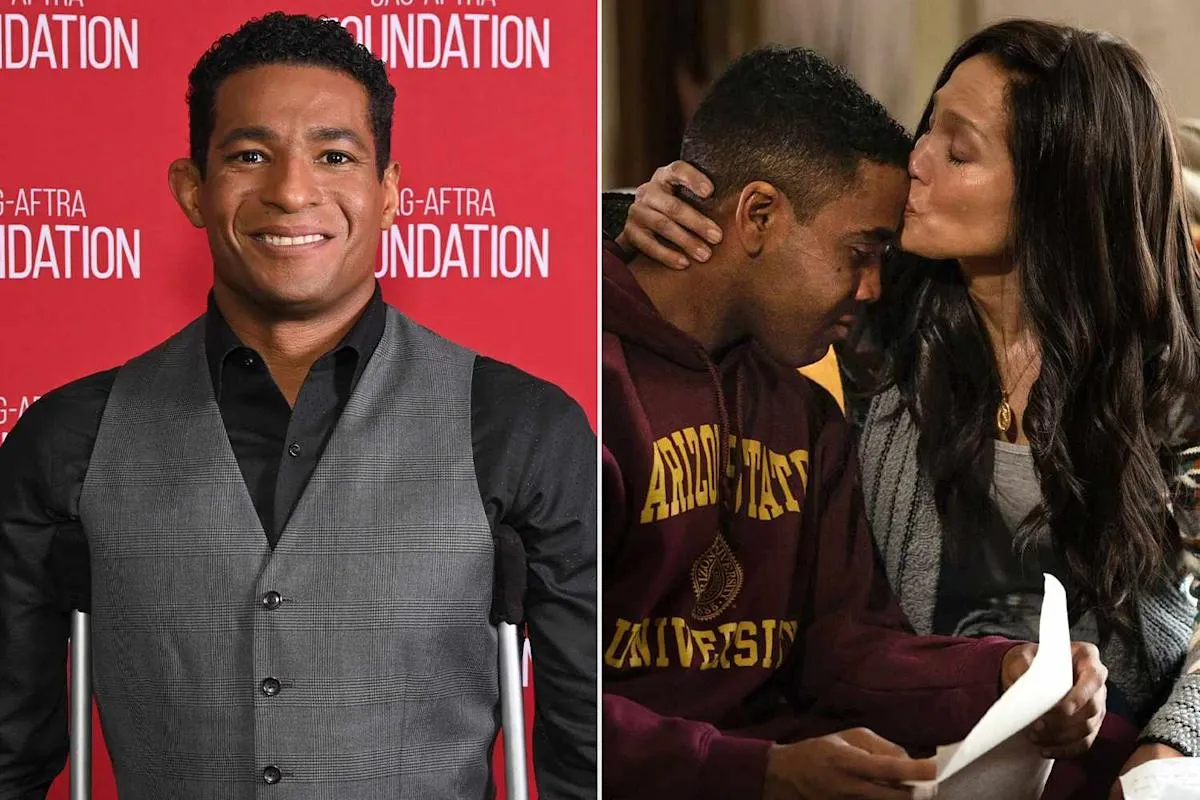 Photo: Anthony Robles, via s.yimg.com
Robles discovered something that wrestling coaches had never considered: having one leg could actually be an advantage if you learned to use it correctly.
With only one leg, Robles was significantly lighter than his opponents while maintaining upper body strength that was proportionally greater than theirs. He developed a unique style based on speed, agility, and leverage that opponents had never encountered and couldn't train for.
His signature move—a lightning-fast single-leg takedown—was nearly impossible to defend against because he could change levels and angles faster than two-legged wrestlers could react. His lower center of gravity made him incredibly difficult to take down, and his upper body strength, concentrated in a lighter frame, gave him advantages in scrambles and mat wrestling.
In 2011, Robles won the NCAA Division I wrestling championship at 125 pounds, finishing his college career with a 36-0 record. He had turned the physics of wrestling on its head, proving that the sport's conventional wisdom about body mechanics was incomplete.
Lex Gillette: The Long Jumper Who Leaped Into Darkness
Blind since age eight due to retinitis pigmentosa, Lex Gillette took up long jumping in high school despite being unable to see the runway, the takeoff board, or the landing pit. In a sport where visual timing and spatial awareness seem essential, this appeared to be the definition of impossible.
Gillette developed a technique that redefined what coaches thought they knew about long jumping. Unable to use visual cues for his approach run, he perfected a system based on counting steps, feeling rhythm, and using audio signals from his coach.
More remarkably, he discovered that jumping blind eliminated the fear and hesitation that plague many sighted jumpers. While other athletes would unconsciously slow down as they approached the takeoff board, worried about fouling or mistiming their jump, Gillette attacked every jump with absolute commitment.
His personal best of 22 feet, 5.75 inches would rank him among the top long jumpers in American history, sighted or blind. He has won multiple Paralympic gold medals and holds the current world record in his classification.
Coaches who worked with Gillette found that his training methods—focusing on rhythm, consistency, and mental preparation rather than visual cues—improved the performance of sighted athletes as well.
Rewriting the Science of Human Performance
These five athletes didn't just overcome their disabilities—they forced sports scientists to reconsider fundamental assumptions about human performance. Their success demonstrated that what we call "disability" might sometimes be better understood as "difference," and that difference can become advantage when properly developed.
Their stories suggest that the human body and mind are far more adaptable than we typically assume, and that the path to excellence isn't always the one that looks most obvious from the outside. Sometimes the most unlikely bodies produce the most extraordinary achievements, reminding us that greatness often emerges not from perfection, but from the creative response to imperfection.
In rewriting their sports' record books, these athletes also rewrote our understanding of what's possible when the human spirit refuses to accept limitations as final answers.