The Night Shift Janitor Who Rewrote the Rules of American Manufacturing
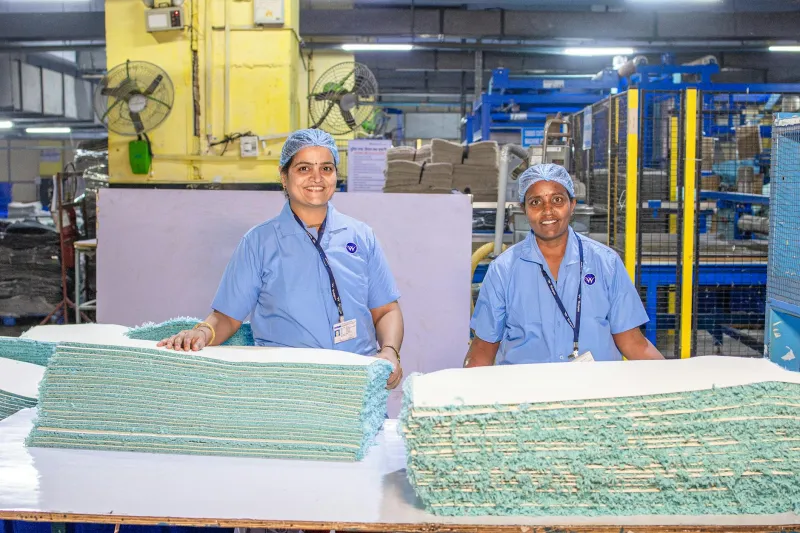
The View from the Floor
Richard Montañez clocked in at 11 PM every night, armed with nothing more than a janitor's cart and an insatiable curiosity about how things worked. While the day shift engineers headed home to suburban comfort, Montañez began his rounds through the sprawling Frito-Lay plant in Rancho Cucamonga, California.
Most people saw a custodian. What they missed was a mind that never stopped asking "why?"
"I had the best seat in the house," Montañez would later reflect. "I could see everything—the waste, the inefficiencies, the places where the machines struggled. The executives only saw the reports. I saw the reality."
For three years, he mopped floors and emptied trash cans while mentally cataloging every bottleneck, every jam, every moment when the production line stuttered to a halt. He watched maintenance crews struggle with the same problems night after night. He saw tons of perfectly good corn chips discarded because they didn't meet the exact specifications for Cheetos coating.
And he started sketching.
Paper Bag Blueprints
Montañez's workshop was his lunch break, his drafting table was whatever clean surface he could find, and his blueprint paper came from the cafeteria's brown bag dispenser. While other workers dozed or played cards during their 30-minute breaks, he drew.
The sketches started simple—minor adjustments to conveyor belt angles, tweaks to sorting mechanisms. But as months passed, the drawings grew more sophisticated. He began envisioning entire process overhauls, ways to capture and repurpose the "waste" cheese powder that currently got swept into dumpsters.
"My wife thought I was crazy," he remembers. "Coming home at 7 AM with orange dust under my fingernails and talking about patent applications. But I could see something nobody else could see—not because I was smarter, but because I was there."
The breakthrough came during a particularly brutal winter night in 1992. A key piece of machinery had broken down for the fourth time that month, shutting down an entire production line. As Montañez watched the repair crew struggle with the same recurring issue, he realized the problem wasn't the machine—it was the process.
The $100 Million Sketch
What Montañez drew on a paper bag that night would eventually be worth over $100 million to American manufacturing.
His innovation was elegant in its simplicity: instead of trying to force irregularly shaped corn chips through uniform coating chambers, why not create adaptive coating zones that adjusted to the product? His design featured flexible barriers that could expand and contract based on the size and shape of whatever passed through.
The concept seemed obvious in hindsight—which is exactly what made it brilliant.
"The engineers had been trying to make the product fit the machine," explains Dr. Sarah Chen, a manufacturing systems expert at MIT who has studied Montañez's patent. "But he flipped the equation. He made the machine fit the product."
Montañez spent six months refining his sketches, teaching himself basic engineering principles from library books during his days off. He calculated tolerances, researched materials, and even built a small prototype using cardboard and duct tape.
When he finally approached his supervisor with the idea, the response was predictable: "You're a janitor. Leave the inventing to the engineers."
David vs. Corporate Goliath
Undeterred, Montañez took a different approach. He bypassed middle management entirely and wrote directly to the company president, including his sketches and a detailed explanation of how his system could reduce waste by 40% while increasing production speed.
Three weeks later, he found himself in a conference room full of suits, explaining his paper bag blueprints to executives who made more in a month than he made in a year.
"They were skeptical," he recalls. "Here's this guy who cleans toilets for a living, telling them how to revolutionize their production line. But the numbers didn't lie."
The company initially offered to buy his idea for $5,000. Montañez declined and filed for a patent instead—a process that cost him nearly two months' salary and required him to navigate a legal system designed for people with engineering degrees and corporate lawyers.
U.S. Patent #5,284,672 was approved eighteen months later.
The Ripple Effect
Montañez's adaptive coating system didn't just transform Frito-Lay's operations—it revolutionized food manufacturing across America. Within five years, variations of his design were being used in facilities from coast to coast, processing everything from breakfast cereals to pet food.
The financial impact was staggering. Industry analysts estimate that implementations of Montañez's system saved American food manufacturers over $2 billion in waste reduction and efficiency gains throughout the 1990s.
But perhaps more importantly, his story changed how companies thought about innovation.
"The Montañez effect," as business schools now call it, demonstrated that transformative insights often come from unexpected sources. Major corporations began implementing "frontline innovation programs," creating formal channels for workers at every level to contribute ideas.
Beyond the Factory Floor
Today, Montañez serves as a vice president at the same company where he once pushed a mop. He's spoken at Harvard Business School, consulted for Fortune 500 companies, and his patent has been cited in over 200 subsequent innovations.
But he hasn't forgotten the view from the factory floor.
"The best ideas are hiding in plain sight," he says. "They're in the hands of the people doing the work, facing the problems every single day. The trick isn't having an MBA or a corner office. The trick is paying attention."
His advice to today's unlikely innovators is simple: "Don't wait for permission to think. Don't wait for someone else to solve the problems you can see. And never, ever throw away a good sketch—even if it's drawn on a paper bag."
In a world obsessed with disruptive startups and Silicon Valley unicorns, Richard Montañez's story serves as a powerful reminder that sometimes the most revolutionary ideas come from the most unlikely places. All it takes is someone willing to look closely, think differently, and believe that their perspective—however humble—might just change everything.