The Woman They Caged for Dreaming Built an Empire from Her Cell
The Crime of Wanting More
Dorothy Hartwell committed an unforgivable sin in 1952 America: she wanted too much. At 29, she had already scandalized her Philadelphia family by refusing three marriage proposals, insisting on keeping her job at a local newspaper, and—most shocking of all—announcing her intention to start her own magazine focused on women's issues.
Her family's response was swift and devastating. After consulting with their family doctor, they had Dorothy committed to Norristown State Hospital for what the intake papers described as "excessive ambition disorder" and "delusional thinking regarding her station in life."
It was a perfectly legal way to silence an inconvenient woman. And it nearly worked.
The Institution That Became a University
Norristown State Hospital in 1952 was a sprawling complex of red brick buildings housing over 7,000 patients. Most were there for legitimate mental health issues, but scattered among them were women like Dorothy—inconvenient daughters, wives who asked too many questions, women whose only crime was refusing to accept the limitations society imposed on them.
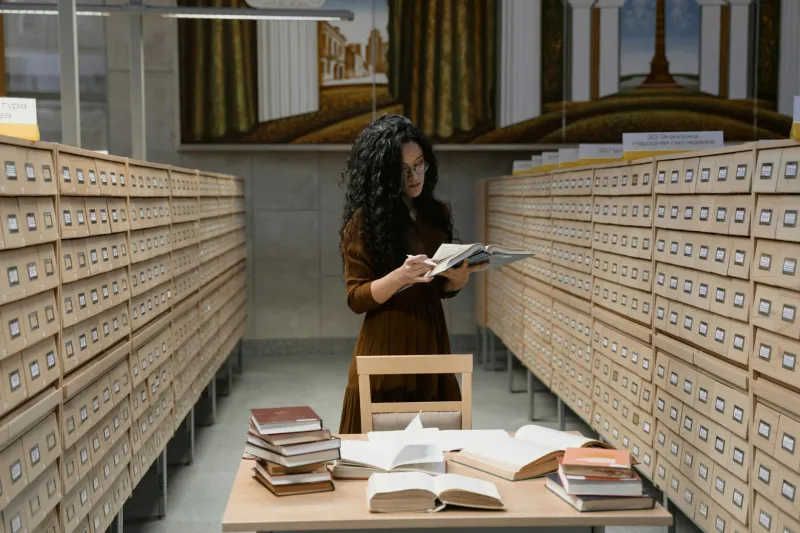
The conditions were harsh, but Dorothy discovered something her family hadn't anticipated: the hospital had a library.
Not just any library, but one of the most comprehensive collections of literature, philosophy, and political theory in Pennsylvania. It had been donated decades earlier by a wealthy patron who believed reading could heal troubled minds. The irony was perfect—the institution meant to cure Dorothy of her intellectual ambitions had handed her the tools to expand them beyond anything she'd previously imagined.
Five Years of Furious Learning
While other patients attended group therapy sessions focused on accepting their proper roles in society, Dorothy spent every available hour in the library. She read voraciously and systematically—American literature, European philosophy, political theory, economics, history. She filled notebook after notebook with ideas, plans, and increasingly sophisticated analyses of the social forces that had landed her in this place.
More importantly, she began corresponding with writers and intellectuals whose work she'd discovered in the library. Using the hospital's letterhead—which most recipients assumed belonged to a staff member—she began building a network of contacts that would prove invaluable years later.
"I realized that being locked away had given me something most people never get," Dorothy wrote in her journal, which survived and was later donated to the Schomburg Center for Research in Black Culture. "Time. Pure, uninterrupted time to think, to read, to plan. They thought they were punishing me, but they were actually preparing me."
The Underground Railroad of Ideas
By her third year at Norristown, Dorothy had become the library's unofficial curator. She organized reading groups, helped other patients find books that spoke to their experiences, and began what she called "the underground railroad of ideas"—a network of patients who shared books, discussed radical concepts, and supported each other's intellectual growth.
She also began collecting stories. Not just from fellow patients, but from the African American staff members who worked at the hospital—orderlies, cleaners, kitchen workers—whose experiences with discrimination and resilience fascinated her. Many had never been asked to share their stories before, and Dorothy became their unofficial biographer.
"Miss Dorothy saw us when nobody else did," recalled James Washington, who worked in the hospital kitchen and later became one of the first authors published by her press. "She listened like our stories mattered, like we mattered. That was rare in 1954."
The Release That Changed Everything
In 1957, Dorothy's father died, and her inheritance gave her something she'd never had before: financial independence. Her mother, perhaps feeling guilty about the years of institutionalization, agreed to Dorothy's release without requiring the usual guarantees about future behavior.
Dorothy emerged from Norristown a fundamentally changed person. The ambitious young woman who had entered was now a strategic thinker with an unshakeable sense of purpose. She had spent five years studying not just literature and philosophy, but power—how it worked, who had it, and how it could be challenged.
Within six months of her release, she had moved to New York City and founded Hartwell Press.
The Press That Amplified a Movement
Hartwell Press started small—a one-room office in Harlem, a used printing press, and Dorothy's fierce determination to publish voices that mainstream publishing ignored. Her first book was a collection of essays by James Washington about his experiences as a Black man working in a predominantly white psychiatric institution.
It sold modestly, but it caught the attention of civil rights leaders who recognized something special in Dorothy's approach. Unlike other white publishers who occasionally took on Black authors, Dorothy seemed to genuinely understand the experiences she was publishing. Her years at Norristown, surrounded by people society had dismissed and ignored, had given her an empathy that couldn't be faked.
Over the next decade, Hartwell Press published some of the most important voices of the civil rights movement. Early works by authors who would later become household names, memoirs by activists whose stories had never been told, poetry collections that captured the emotional reality of the struggle for equality.
The Empire Built on Rejection
By 1970, Hartwell Press was one of the most respected independent publishers in America. Dorothy had built a catalog of over 200 titles, established a distribution network that reached bookstores across the country, and created a mentorship program that helped dozens of writers develop their craft.
More importantly, she had proved something that her family—and society—had tried to convince her was impossible: that a woman's ambitions, no matter how large, were not a mental illness to be cured but a force to be unleashed.
"They locked me away because I dreamed too big," Dorothy said in a 1975 interview. "But dreams are like seeds. You can bury them, but if they're strong enough, they'll find a way to grow anyway. Sometimes the burial just makes the roots stronger."
The Library That Started It All
In her later years, Dorothy often returned to Norristown State Hospital, which had been converted into a community center. She would stand in the old library, now a computer lab, and remember the young woman who had discovered her true calling while imprisoned for her ambitions.
"The cruelest irony," she wrote in her memoir, published by Hartwell Press in 1985, "was that the system designed to break me handed me exactly what I needed to become unbreakable. They gave me time, books, and an unshakeable understanding of what it means to be underestimated. I couldn't have asked for better preparation."
Dorothy Hartwell died in 1998, but Hartwell Press continues to operate, still publishing voices that challenge conventional wisdom and amplify stories that might otherwise go untold. The woman who was once caged for dreaming had built something that outlasted her captors, her critics, and even herself.
Sometimes the people who try to silence you end up giving you the loudest voice of all.