The Steady Hands That Saved Lives Started in Aisle Seven
The Night Shift That Changed Everything
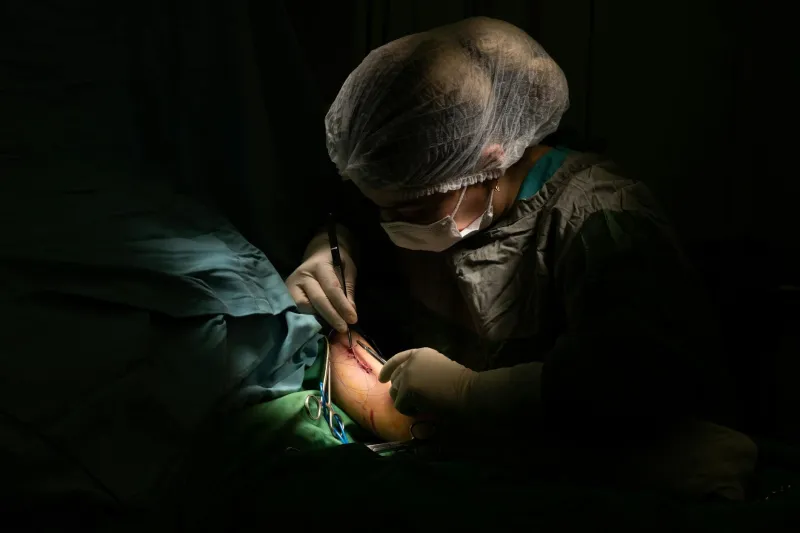
At 2:47 AM on a Tuesday in Kandahar, Afghanistan, the trauma bay erupted into controlled chaos. Three wounded soldiers had just been airlifted in from a roadside bombing, each fighting for their lives. While other surgeons shouted orders and nurses scrambled, Dr. Marcus Chen moved with an almost supernatural calm, his hands steady as he worked to save a young Marine whose femoral artery had been severed.
It was the kind of pressure that breaks most people. But Chen had been preparing for this moment in the most unlikely place imaginable: the night shift at a Kroger supermarket in Columbus, Ohio.
From Dropout to Deli Counter
Chen's story begins not in medical school lecture halls, but in the fluorescent-lit aisles of suburban grocery stores. After dropping out of high school at 17—"I was angry, directionless, and convinced the world owed me something," he recalls—Chen spent the next eleven years bouncing between retail jobs. He bagged groceries, stocked produce, worked the deli counter, and eventually became a night shift supervisor.
While his former classmates were graduating college and starting careers, Chen was learning a different curriculum entirely. He mastered the art of staying calm when the store was slammed during holiday rushes. He developed an uncanny ability to multitask—restocking shelves while helping customers while training new employees. Most importantly, he learned to keep working steadily even when everything around him felt like it was falling apart.
"Those Friday night shifts before Thanksgiving were like combat," Chen says now, only half-joking. "Angry customers, broken equipment, understaffed departments. You either learned to stay focused and methodical, or you cracked."
The GED That Started a Revolution
At 28, Chen finally earned his GED. Not because he suddenly discovered ambition, but because a customer—a local doctor—had been watching him work for months. "You have the steadiest hands I've ever seen," the doctor told him one night. "Have you ever thought about medicine?"
Chen hadn't. But something about the suggestion stuck. He enrolled in community college, then transferred to Ohio State, working nights at the grocery store to pay his way through pre-med courses. His classmates were a decade younger, most from comfortable middle-class families who saw medical school as the logical next step in their carefully planned lives.
Chen was different. He approached studying with the same methodical patience he'd used to reorganize entire stockrooms. While other students panicked over organic chemistry exams, Chen treated them like inventory counts—something that required focus and persistence, but nothing he couldn't handle.
Medical School's Unlikely Star
By the time Chen entered medical school at 34, he was already an outlier. His interviews were filled with stories about customer service and inventory management instead of research papers and volunteer work at prestigious hospitals. Some professors wondered if he had the intellectual firepower to succeed.
They were asking the wrong question.
Chen didn't just succeed—he excelled in ways that surprised everyone, including himself. During surgical rotations, while other students fumbled with instruments or froze under attending physicians' scrutiny, Chen displayed an almost preternatural calm. His hands never shook. His voice never wavered. When complications arose during procedures, he didn't panic—he simply adapted, the same way he'd adapted when the store's computer system crashed during the busiest shopping day of the year.
"Marcus had this quality that's almost impossible to teach," recalls Dr. Sarah Williams, his surgical attending. "He could maintain absolute focus in chaos. Most students take years to develop that kind of composure. He walked in with it."
The Military's Most Decorated Surgeon
After completing his residency in trauma surgery, Chen joined the Army Medical Corps. It was 2008, and American forces were deep into conflicts in Iraq and Afghanistan. The military needed surgeons who could handle the unthinkable—multiple casualties, limited resources, life-and-death decisions made in seconds.
Chen thrived in this environment in ways that stunned his colleagues. While other highly trained surgeons struggled with the intensity of combat medicine, Chen seemed built for it. He could operate for eighteen hours straight without losing focus. He could triage multiple critical patients simultaneously. Most remarkably, he never lost his composure, even when treating soldiers who reminded him of his younger brothers.
Over three deployments, Chen performed over 2,000 combat surgeries with a survival rate that exceeded military averages by nearly 15%. He earned two Bronze Stars, a Meritorious Service Medal, and the respect of every medic and nurse who worked with him.
The Kroger Connection
What his military colleagues didn't initially understand was that Chen's extraordinary performance under pressure wasn't just natural talent—it was the product of years of training in the most mundane circumstances imaginable.
"People think high-pressure situations require dramatic preparation," Chen explains. "But I learned my most valuable skills dealing with angry customers who wanted their money back, or trying to restock dairy products during the morning rush when everyone's running late for work. You learn to stay calm, think clearly, and keep your hands steady no matter what's happening around you."
The skills that made him exceptional in combat—the ability to prioritize tasks under pressure, to remain calm when others panicked, to work efficiently with limited resources—were the same skills he'd developed during a decade of retail work that most people would consider a career dead-end.
Beyond the Operating Room
Now 52 and serving as Chief of Trauma Surgery at Walter Reed National Military Medical Center, Chen has trained hundreds of military surgeons. His approach is unconventional but effective: he teaches students to find their calm not through meditation or breathing exercises, but through methodical preparation and trust in their own competence.
"The steadiest hands," he tells them, "aren't born that way. They're built through repetition, through learning to work well even when conditions aren't ideal, through developing confidence in your ability to handle whatever comes next."
Chen's story challenges our assumptions about preparation and success. While his peers were following traditional paths through elite institutions, he was developing the exact qualities that would make him exceptional—not despite his unconventional background, but because of it.
In a profession where pedigree often matters more than performance, Chen proved that the most valuable training sometimes happens in the most unexpected places. Sometimes the longest road really does produce the surest hands.