The Voice Behind the Line: How a Telephone Operator Quietly Revolutionized Detroit's Manufacturing Floor
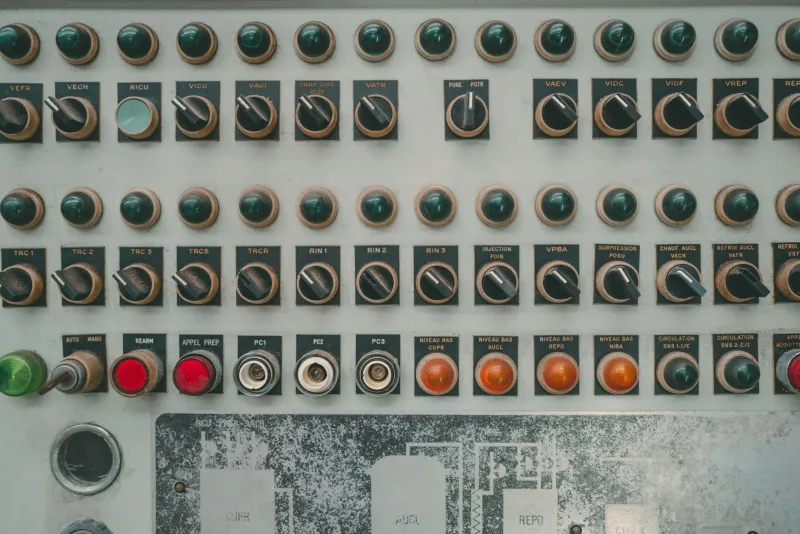
The Switchboard View
In 1953, Margaret Chen arrived for her first shift at Willow Run's sprawling automotive complex with a simple job description: answer phones, route calls, keep the communication lines flowing. What nobody expected was that this unassuming woman from Detroit's east side would spend the next decade quietly documenting the inefficiencies of American manufacturing from her unique perch at the nerve center of industrial communication.
Chen's switchboard sat at the intersection of every department—production, quality control, shipping, maintenance. While supervisors rushed between meetings and engineers pored over blueprints, she listened. Every frustrated call about delayed parts. Every urgent request for overtime crews. Every heated exchange about bottlenecks that nobody seemed able to solve.
"I wasn't trying to be nosy," Chen would later tell a reporter from Industry Week. "But when you're connecting the same emergency calls day after day, you start to see patterns that maybe the people making those calls don't see."
Notes in the Margins
Chen began keeping a notebook. Not officially—just personal observations scribbled during quiet moments between calls. She tracked which departments called each other most frequently, when production slowdowns typically occurred, and how information flowed (or failed to flow) through the plant's hierarchy.
What emerged was a detailed map of organizational dysfunction that no single manager could see from their departmental silo. Chen noticed that quality control issues reported on Tuesday morning were often the result of parts shortages that shipping had flagged the previous Friday—but the information never reached the right people in time.
She documented how the third shift consistently outperformed the first shift, not because of superior workers, but because they had developed informal communication shortcuts that bypassed the official chain of command. She observed that maintenance requests processed through her switchboard took an average of three days longer than those handled through direct supervisor contact.
The Crisis That Changed Everything
For seven years, Chen kept her observations to herself. Then came the summer of 1960, when a perfect storm of supplier delays, equipment failures, and communication breakdowns brought Willow Run to its knees. Production fell 40% behind schedule. Overtime costs skyrocketed. The plant faced potential closure.
Desperate managers held emergency meetings, brought in consultants, and demanded solutions from every department. That's when Chen did something unprecedented—she walked into plant manager Robert Kellman's office with her notebook.
"She just appeared at my door one Tuesday morning," Kellman recalled years later. "This quiet telephone operator with a spiral notebook full of the most detailed operational analysis I'd ever seen. She knew our problems better than our own engineers."
Chen's documentation revealed the root cause of their crisis: information bottlenecks. Critical data was getting trapped in departmental silos, creating cascading delays throughout the production process. Her proposed solution was elegantly simple—restructure communication flows to match actual workflow patterns rather than organizational charts.
The Transformation
Kellman was skeptical but desperate. He authorized Chen to implement a pilot program in one production line. Her changes were subtle but revolutionary. She created direct communication channels between departments that naturally interacted, eliminating unnecessary hierarchical steps. She established daily cross-departmental briefings to share real-time production data. Most importantly, she redesigned the physical layout of key supervisory positions to improve information flow.
The results were immediate. The pilot line's efficiency improved 23% in the first month. Quality defects dropped by a third. Worker satisfaction surveys showed marked improvement as employees felt more informed and empowered.
Word spread quickly through Detroit's automotive corridor. Other plants began requesting consultations with the "telephone lady" who had somehow solved problems that had stumped industrial engineers for decades.
Beyond the Assembly Line
Chen's innovations extended far beyond Willow Run. Her communication-focused approach to manufacturing efficiency influenced the development of what would later be called "lean manufacturing" principles. Major corporations across America began examining their own information flows, often discovering that their organizational structures were actively hindering productivity.
By 1965, Chen had been promoted to Director of Operational Communications—a position created specifically for her. She consulted for plants from California to Carolina, teaching managers to see their operations through the lens of information flow rather than traditional hierarchical control.
Her methodology became required study at several business schools, though few students realized they were learning principles developed by a woman who never attended college.
The Unlikely Revolutionary
Margaret Chen retired in 1978, having transformed not just one plant but an entire approach to American manufacturing. Her career trajectory—from switchboard operator to industrial consultant—defied every convention of mid-century corporate America.
What made her success possible wasn't advanced education or insider connections. It was position and patience. Her job required her to listen, and she chose to hear. While others focused on their individual responsibilities, she saw the bigger picture simply because her work demanded it.
"The best solutions often come from the people closest to the actual work," Chen reflected in a 1985 interview. "But you have to be willing to listen to voices that don't usually get heard in boardrooms."
Today, as companies struggle with digital transformation and remote work challenges, Chen's core insight remains relevant: the key to operational excellence isn't always better technology or smarter executives. Sometimes it's just paying attention to what the people who handle the day-to-day communication are trying to tell you.
The woman who answered phones at a Detroit auto plant didn't just connect calls—she connected the dots that reshaped American industry.