The Blind Pitcher Who Struck Out a Generation of Doubters
The Sound of Strike Three
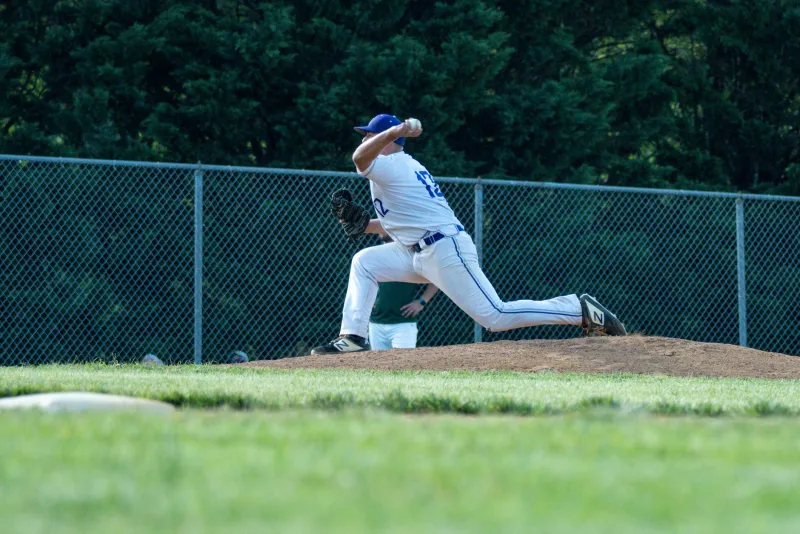
The crack of the bat never came. Instead, there was the soft thud of leather meeting palm, followed by the umpire's decisive call: "Strike three!" For the third time that inning, Marcus Williams had painted the corner of the strike zone with surgical precision, and for the third time, he couldn't see where his fastball had gone.
Williams lost his sight at fourteen to a rare genetic condition called Leber congenital amaurosis. Most teenagers would have hung up their glove forever. Marcus spent the next four years learning to pitch by sound, touch, and an almost supernatural understanding of the game that would eventually make him one of the most talked-about prospects in amateur baseball.
Building a New Language
The conventional wisdom about pitching revolves around reading the batter—their stance, their swing, the subtle tells that telegraph their intentions. Williams had to throw all of that out and start from scratch. Working with his high school coach, Tom Rodriguez, he developed a system that seemed impossible until you watched it work.
"Marcus could hear things the rest of us missed," Rodriguez remembers. "The way a batter shifted their weight, the difference between a confident practice swing and a nervous one. He was reading the game through his ears while we were still trying to figure out what we were looking at."
Williams learned to use the catcher's mitt as his target, listening for the subtle movements of leather and the whispered signals that became his GPS to home plate. He memorized the sound of different types of swings—the whoosh of a batter going for a home run versus the controlled cut of someone protecting the plate with two strikes.
But perhaps most remarkably, he developed an internal clock that was more accurate than most radar guns. Williams could tell you the speed of his fastball within two miles per hour just by the feel of his release and the sound it made cutting through the air.
The Doubters' Chorus
The ridicule started early and never really stopped. Opposing teams would try to rattle him with noise from the dugout, thinking they could exploit his reliance on sound. College scouts dismissed him without ever seeing him pitch. "It's a liability," one Division I coach told Rodriguez after watching Williams strike out twelve batters in a seven-inning game. "What happens when there's a line drive back at him?"
The answer came during Williams' senior year. With runners on first and second and his team leading by one run in the bottom of the ninth, the cleanup hitter connected with a fastball and sent it screaming back toward the mound. Williams heard it coming before anyone else could react, shifted slightly to his left, and caught the ball barehanded for the final out.
"That was the moment I knew we weren't dealing with some feel-good story," says Janet Morrison, the sports reporter who covered high school baseball for the local paper. "This kid wasn't just overcoming his blindness. He was using it."
The Science of the Impossible
Dr. Sarah Chen, a sports psychologist who studies sensory adaptation in athletes, worked with Williams during his junior year to understand how his brain had rewired itself for baseball. What she found challenged everything researchers thought they knew about athletic performance.
"Marcus had developed what we call 'compensatory enhancement,'" Chen explains. "His auditory processing had become so refined that he could detect micro-changes in sound that indicated everything from wind direction to the batter's emotional state. He wasn't just adapting to his blindness—he was gaining advantages that sighted players didn't have."
The numbers backed up the theory. Williams' ERA during his final two years of high school was 0.97. He walked fewer batters per nine innings than most college pitchers. And his ability to sense when runners were stealing second base was so acute that opposing coaches stopped trying.
Rewriting the Rules
By the time Williams graduated, something had shifted in how people thought about physical limitations in sports. College programs that had initially dismissed him were calling Rodriguez daily. The NCAA quietly began reviewing their accommodation policies for visually impaired athletes. And Williams himself was fielding calls from major league scouts who wanted to understand how someone could pitch effectively without seeing the strike zone.
The breakthrough came when Williams was recruited by a Division II school in Texas whose coach, Maria Santos, had played professional softball before losing her hearing in a car accident. Santos understood that disability could become advantage under the right circumstances.
"Marcus taught us that we'd been thinking about baseball all wrong," Santos reflects. "We're so focused on what players can see that we forget the game is played with every sense. Marcus just happened to be better at using the ones that really mattered."
The Quiet Revolution
Today, Williams is in his third year of college baseball, carrying a 2.1 ERA and a reputation for being nearly impossible to steal on. More importantly, he's become a symbol of how athletic achievement can transcend physical limitations when we're willing to reimagine what's possible.
His story has inspired changes in how youth leagues approach adaptive sports, and several major league organizations have begun studying his techniques to help their sighted pitchers develop better situational awareness.
But perhaps the most telling measure of Williams' impact is how normal his success has become to his teammates. "We forget he's blind half the time," says his catcher, David Kim. "He's just our ace. He just happens to pitch by sound instead of sight."
In a sport built on tradition and conventional wisdom, Marcus Williams proved that sometimes the most unlikely path forward is the only one that makes sense. He didn't just strike out the doubters—he made them question everything they thought they knew about what it takes to succeed.