The Manuscript They Tried to Bury: How Asylum Walls Couldn't Contain One Woman's Literary Genius
The Crime of Ambition
Margaret Whitmore made the mistake of telling her family she intended to become a writer. It was 1923, she was twenty-four, and her parents had already selected a suitable husband—a banker's son with good prospects and no patience for what he called "literary nonsense." When Margaret refused the engagement and announced plans to move to New York City with her typewriter and life savings, her father made a phone call that would change everything.
 Photo: Margaret Whitmore, via ringside24.com
Two days later, a doctor arrived at the Whitmore family home in Springfield, Illinois. After a brief conversation with Margaret's parents—but not with Margaret herself—he signed commitment papers citing "hysteria," "delusions of grandeur," and "rejection of natural feminine roles." By evening, Margaret was a patient at the Riverside State Hospital for the Insane, beginning what would become a fifteen-year confinement.
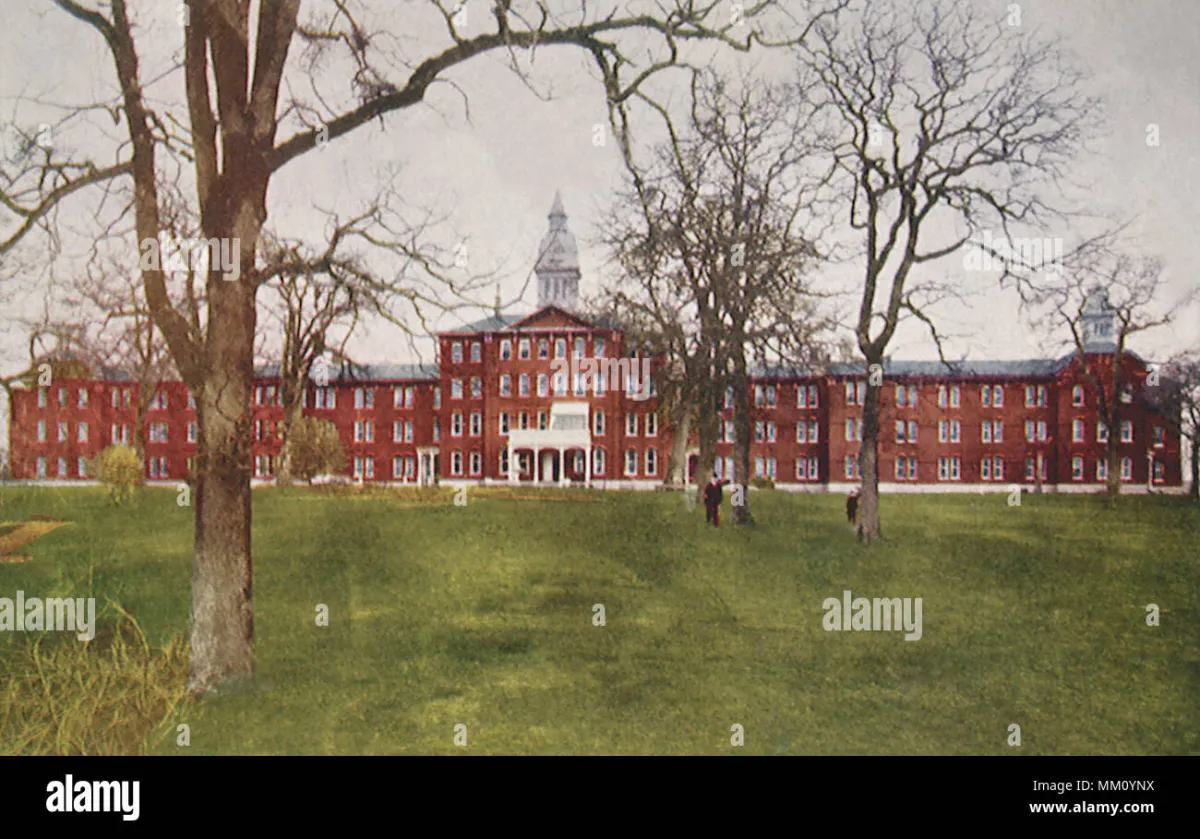 Photo: Riverside State Hospital for the Insane, via c8.alamy.com
The irony was lost on no one except her family: they had institutionalized her for being too ambitious, then placed her in an environment where her only escape would be through the very creativity they'd tried to suppress.
Writing in the Margins
Riverside State Hospital in the 1920s was a grim place designed to break spirits rather than heal them. Patients were forbidden personal possessions, including paper and writing materials. But Margaret quickly discovered that institutional life generated endless paperwork—medical charts, meal requests, therapy session notes—and much of it ended up in wastebaskets barely monitored by overworked staff.
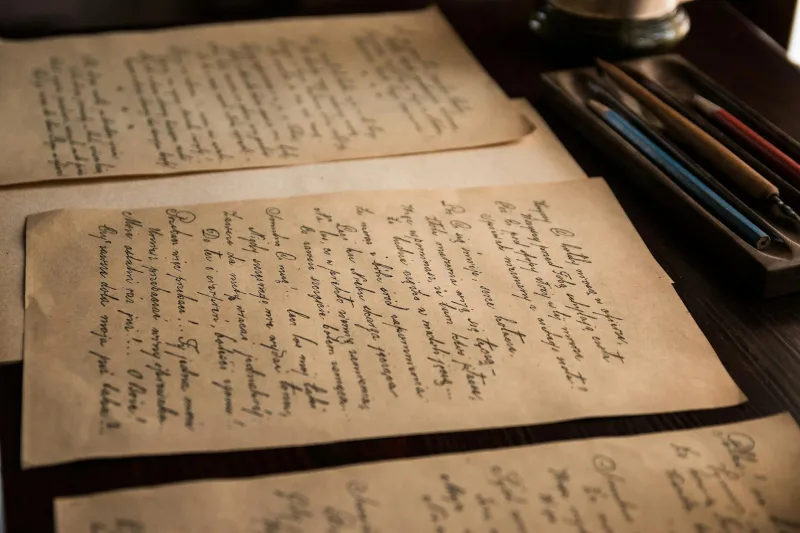
She began collecting discarded forms, smoothing them out in her dormitory bed after lights-out. Using pencil stubs borrowed from the hospital's single classroom, she started writing in the margins, around printed text, and on the backs of prescription pads. What began as a way to maintain her sanity gradually became something much larger: a sweeping novel about a young woman's journey through an America that punished female ambition.
The writing process was necessarily fragmented. Margaret could only work in stolen moments—during supervised recreation periods when she'd slip away to hidden corners, or late at night by moonlight streaming through barred windows. She developed an intricate system for hiding pages, tucking them inside mattresses, behind loose bricks, and within the bindings of approved religious texts.
The Underground Masterpiece
What emerged over fifteen years was "The Gilded Cage," a novel that followed protagonist Sarah Brennan through a society determined to limit her possibilities. Drawing from her own experience and observations of fellow patients—many committed for similar "crimes" of independence—Margaret created a work that was both deeply personal and broadly political.
The novel's structure reflected its unconventional creation process. Rather than traditional chapters, it unfolded in interconnected vignettes that could be read separately or together. This wasn't artistic choice but practical necessity—Margaret never knew when she might be discovered or transferred, so each section had to work as a complete unit.
Her fellow patients became unwitting collaborators. Margaret would test dialogue by incorporating it into conversations during meal times, observing how different personalities responded to various phrasings. She studied the speech patterns of women from different backgrounds—farm wives, factory workers, society ladies—all thrown together by the democracy of mental illness.
The Discovery
Margaret Whitmore died in 1953 at age fifty-four, still a patient at Riverside. Her family, who had never visited during her thirty-year confinement, declined to claim her body or possessions. Hospital protocol required destroying patient belongings, but archivist James Morrison was tasked with preserving any documents that might have historical value.
Morrison almost missed it. Flipping through Margaret's medical file, he noticed that some pages contained handwritten text that seemed unrelated to her treatment. Closer inspection revealed that someone had been writing a story in the margins of official documents. Intrigued, he began searching Margaret's dormitory space more carefully.
What he found was extraordinary: hundreds of pages of manuscript material hidden throughout the ward. Some were written on medical forms, others on scraps of brown paper from the hospital kitchen. A few sections were inscribed on the inside covers of books, written in pencil so faint it was barely visible. Morrison spent weeks piecing together what appeared to be a complete novel.
Literary Recognition
Morrison shared his discovery with a professor friend at the University of Illinois, who immediately recognized the manuscript's literary merit. "The Gilded Cage" was finally published in 1961, eight years after Margaret's death, by a small academic press that specialized in recovered women's writing.
The novel's impact was immediate and profound. Critics praised its unflinching examination of how society punished women who refused conventional roles. The fragmented structure, born of necessity, was hailed as innovative narrative technique. Most powerfully, the book's authenticity—written from within the system it critiqued—gave it an authority that fiction written from the outside could never achieve.
Within five years, "The Gilded Cage" had been reprinted by major publishers and was being taught in college literature courses across the country. It became required reading for the emerging women's liberation movement, with activists finding in Margaret's story a powerful example of how creativity could survive even the most oppressive circumstances.
The Lasting Impact
Today, "The Gilded Cage" is considered a masterpiece of American literature, regularly appearing on lists of the most important novels of the twentieth century. Margaret Whitmore's story has inspired countless other writers, particularly women, who see in her determination a model for pursuing creative work despite societal obstacles.
Perhaps most remarkably, the novel's unconventional creation process influenced how we think about literature itself. Margaret proved that great art doesn't require ideal conditions—it requires only an irrepressible need to create and the ingenuity to find a way.
The Unbreakable Spirit
Margaret Whitmore's family thought they could cure her ambition by locking it away. Instead, they created conditions that transformed a young woman's literary dreams into one of America's most powerful novels. Her story reminds us that creativity, like water, finds a way—seeping through cracks, pooling in unexpected places, and ultimately carving new channels that change the landscape forever.
In the end, the walls meant to contain Margaret's voice became the very foundation upon which she built her literary legacy.