The Doctors Said Her Racing Days Were Over Before They'd Even Begun
The Doctors Said Her Racing Days Were Over Before They'd Even Begun
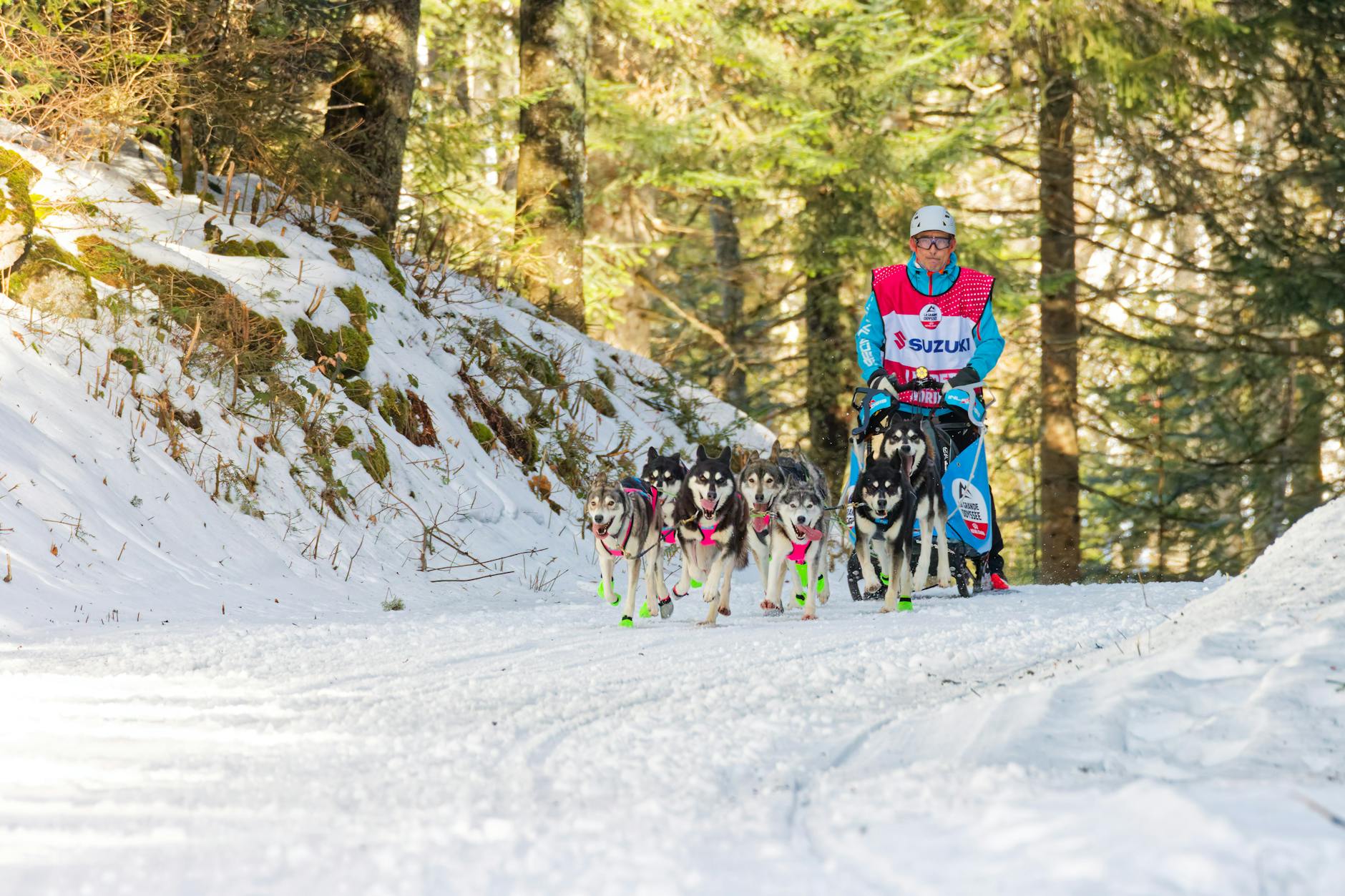
The Iditarod Trail Sled Dog Race covers roughly 1,000 miles of Alaskan wilderness. It crosses two mountain ranges. It passes through temperatures that can plunge to minus 60 degrees Fahrenheit. It runs through stretches of terrain so remote that if something goes wrong, the nearest help might be hours away by air.
It is, by any reasonable measure, one of the most physically brutal endurance events on earth.
It is also, increasingly, being completed by athletes whose bodies were once described to them in the past tense.
The Conversation Nobody Wants to Have
For many adaptive athletes, there is a specific moment they return to — a conversation with a physician, or a physical therapist, or a well-meaning specialist — where the future was laid out for them in clinical language that left very little room for negotiation.
For Rachael Scdoris, that conversation happened early. Born with a rare visual disorder called congenital achromatopsia, she has been legally blind since birth. When she began pursuing competitive sled dog racing as a teenager, the response from the governing bodies of the sport was, to put it politely, skeptical. The Iditarod's own rules required mushers to be able to read trail markers — a requirement that, applied literally, would have barred her entirely.
Scdoris didn't argue with the diagnosis. She argued with the conclusion people drew from it.
After years of advocacy — and after demonstrating, repeatedly, that her disability altered her method without diminishing her capability — she competed in the Iditarod in 2005 and again in 2006, becoming one of the first legally blind mushers to do so. She used a sighted guide running alongside her on a snowmobile for portions of the trail. She adapted the system rather than accepting the system's verdict on her.
That distinction matters more than it might initially seem.
What Rehabilitation Medicine Gets Wrong
Dr. Theresa Marko, a physical therapist and sports medicine specialist based in New York, has worked with adaptive athletes across a range of disciplines. She is careful to distinguish between medical prognosis — which is a probabilistic assessment based on population data — and individual potential, which is something else entirely.
"When we tell a patient they may not walk again, we're drawing on what we know about similar injuries in similar patients," she has explained in public discussions of adaptive sport. "What we can't account for is what that specific person is going to do with that information. Some people hear it as a sentence. Others hear it as a starting point."
The athletes who end up on the Iditarod trail, or the Paralympic podium, or the finish line of an Ironman triathlon, tend to be people who heard it as a starting point.
This is not a personality type that can be manufactured through motivation or positive thinking. It appears to be something more structural — a fundamental unwillingness to accept external definitions of internal limits. Coaches who work with adaptive athletes describe it consistently: the athletes who make it to extreme events aren't necessarily the ones with the least severe injuries. They're the ones who decided, at some point, that the injury was a variable to be managed rather than a verdict to be accepted.
The Body as a Negotiation
What the Iditarod demands of any musher is not just physical endurance but systems thinking. A racer must manage their dogs' health, nutrition, and rest schedules across days of continuous travel. They must read weather, terrain, and trail conditions in real time. They must make decisions, sometimes in whiteout conditions and sleep-deprived states, that directly affect their survival.
For adaptive mushers, this calculus includes an additional layer: managing their own body's specific requirements alongside everything else. Rachael Scdoris, navigating with limited vision, developed an acute sensitivity to sound, temperature change, and the behavior of her dogs that sighted mushers often describe as almost preternatural. Her disability had, in a very specific way, made her better at parts of the job.
This is a pattern that shows up repeatedly in adaptive sport. The accommodation of a limitation often produces a capability. The workaround becomes the method. What looks from the outside like a disadvantage being overcome is sometimes, on closer inspection, a different kind of advantage being developed.
Permission Nobody Gave Them
There's a particular kind of courage that doesn't get discussed much in the inspirational-story genre: the courage to attempt something before anyone has given you permission to believe you can do it.
The adaptive athletes who compete in extreme endurance events aren't doing so because a doctor cleared them, or because a governing body waved them through, or because the culture around them said it was possible. Most of them are doing it in explicit defiance of one or more of those things.
Scdoris fought for years to be allowed to compete at all. Other adaptive athletes have faced insurance complications, equipment funding shortfalls, and an endurance sports culture that, for all its professed inclusivity, sometimes treats disability as an asterisk next to a result rather than a legitimate athletic category in its own right.
The ones who make it to the starting line — let alone the finish — have usually already won a different kind of race.
What the Wilderness Doesn't Care About
Here is what the Iditarod trail does not know and does not care about: your diagnosis, your prognosis, your medical history, or the conversation you had in a hospital room about what your future was going to look like.
The trail is indifferent. The cold is indifferent. The 1,000 miles between Anchorage and Nome do not grade on a curve or offer accommodations for expectation.
In a strange way, that indifference is the point. For athletes who have spent years navigating a world full of people with opinions about what their bodies can and cannot do, the Alaskan wilderness offers something almost radical: a challenge that meets them exactly as they are, without pity or condescension, and asks simply whether they can get to the other end.
Some of them do.
And when they cross that finish line — cold, exhausted, and almost certainly frostbitten — they are not proving anyone wrong. They're doing something quieter and more permanent than that.
They're rewriting what the word possible is allowed to mean.